
Australian buyers looking for cheap teddy bears in bulk usually have three real choices: domestic retail marketplaces, cross-border wholesale-style marketplaces like DHgate or Alibaba, and direct factory/wholesale suppliers. None is universally “best.” For a school fete needing 50 bears next week, local Amazon or eBay sellers are often simpler and faster to work with. For a small online gift shop testing 200-300 bears and squeezing margin, DHgate and similar platforms can make sense. For thousands of logo-printed bears, a factory route via Alibaba or a dedicated plush manufacturer is usually the right move.
The key decision is matching your order size, deadline and quality risk tolerance to the platform type, then deciding whether DHgate specifically fits that route.
How the Budget Teddy Bear Sourcing Landscape Looks for Australian Buyers
For Australian events and small retailers, budget teddy bears typically enter through four kinds of channels:
- Domestic retail marketplaces – Amazon Australia, eBay Australia and newer low-cost apps. These are geared to consumers but many sellers offer multi-pack or case quantities once you dig into the listings.
- Cross-border retail marketplaces – platforms like AliExpress or Temu that ship low-priced consumer goods from overseas warehouses, often with small bundles or multi-packs rather than true wholesale.
- Cross-border wholesale/B2B marketplaces – DHgate and Alibaba connect buyers with overseas suppliers offering bulk pricing, with more emphasis on cartons and mixed lots than single gifts.
- Direct factories and specialist plush suppliers – directories and manufacturer sites (for example, plush specialist lists like the ones compiled in Leeline Toys’ manufacturer overview) show companies that produce bears at scale, often with customisation.
For Australia, choosing a cross-border option means accepting longer lead times and customs exposure in exchange for lower unit costs and wider variety. Domestic channels usually win on speed and logistical simplicity but rarely on rock-bottom pricing for larger quantities.
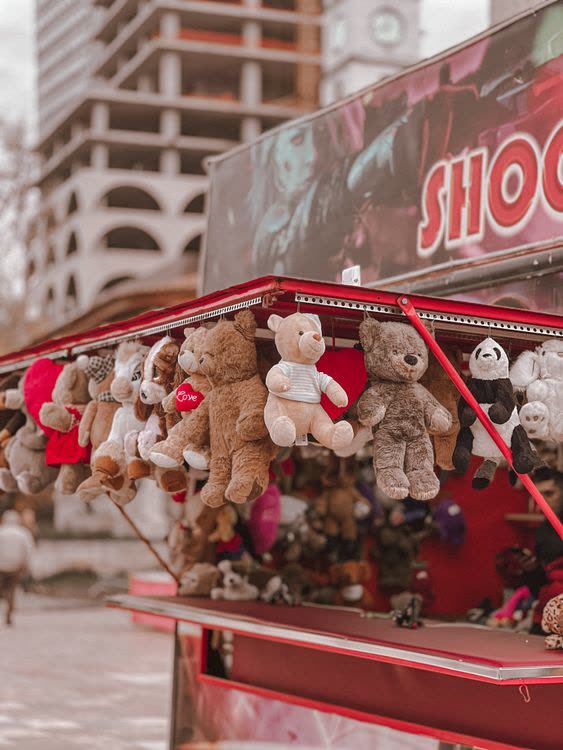
Marketplace vs Factory vs Retail: How Each Route Works for Teddy Bears
The platform type you pick changes how your teddy bear order actually runs.
Retail marketplaces (Amazon, eBay, Temu-style apps)
Retail marketplaces revolve around listing-level purchases, not negotiated contracts. For teddy bears:
- Typical volumes: tens of units per listing, sometimes more if a seller pre-packs cartons.
- Workflow: search phrases like “teddy bears bulk,” choose a listing with the right pack size, pay at checkout. There’s usually no separate minimum order quantity (MOQ) or quote process.
- Relationship: you rarely build an ongoing relationship; you reorder or switch sellers based on stock and price.
This works well for one-off events and small trials where you care more about predictable arrival than squeezing every cent out of the unit cost.
Wholesale/B2B marketplaces (DHgate, Alibaba)
DHgate and Alibaba sit in a wholesale-oriented space. DHgate’s own editorial comparisons frame both platforms as large wholesale marketplaces with competitive pricing but slightly different buyer scales: Alibaba leaning to businesses purchasing at serious scale, DHgate straddling business-to-business and business-to-consumer use, which can be friendlier to smaller buyers.
For teddy bears on these marketplaces:
- Typical volumes: often dozens to hundreds of units per lot, sometimes more; many suppliers will discuss tailoring quantities through messaging.
- Workflow: you browse teddy bear lots, assess supplier profiles, and then either buy directly from the listing or message to clarify price breaks and variants (colors, ribbons, gift packaging).
- Relationship: you’re closer to a supplier relationship than a simple retail purchase, especially if you plan repeat orders.
Editorial content from DHgate also suggests that bulk buyers may find DHgate more cost-effective than Amazon for large orders because of wholesale-style pricing, while Amazon retains an edge on frictionless buying for time-pressed shoppers. That distinction is useful for teddy bear decisions: if cost per bear matters more than speed, a B2B marketplace route becomes more appealing.
Factory and specialist supplier platforms
Factory directories and specialist plush manufacturers are geared to serious volumes or customised product runs:
- Typical volumes: hundreds to thousands of bears, sometimes with formal MOQs.
- Workflow: you send a spec (size, fabric, any safety standards you need to check, potential branding), request a quote, and often commission samples before placing a production order.
- Relationship: this is a deeper commercial relationship, potentially with repeat seasonal orders and long-term pricing discussions.
For budget teddy bears, factories make most sense once your volumes justify the overhead of sampling, contracts and inbound freight coordination. For a one-off fundraising gala, that overhead is usually excessive.
DHgate Teddy Bear Listing Snapshot (Checked 2026-10-13)
To ground DHgate’s role in teddy bear sourcing, here are a few live listings observed on 2026-10-13. Prices and availability can change, and these are examples, not endorsements.
- Cute Teddy Bears Stuffed Plush Toys Bear Animal Plushies Dolls Soft Bear Valentines Day Gifts Kids Birthday Home Decor Party260430 – a plush doll listing with a price range around USD 21.19-21.91 per lot from seller “dongzhu08” in the Plush Dolls category. (view listing)
- Cute Teddy Bears Stuffed Plush Toys Bear Animal Plushies Dolls Soft Bear Valentines Day Gifts Kids Birthday Home Decor Party251209ww – similar teddy bear plushes positioned for kids’ birthdays and decor, in the Stuffed & Plush Animals category, priced roughly USD 19.80-20.96 per lot from the same seller. (view listing)
- Christmas Bear Lovely Teddy Bear Plush Toys Stuffed Cute Love Run Bear Girls Valentines Gift Kids Baby Christmas Gifts 251028 – event- and gift‑oriented teddy bears in the Plush Dolls category, with a price band near USD 15.56-16.12 from seller “bigwang08.” (view listing)
- packaged teddy bears, mini plush in boxes, small pocket bears with inspirational cards, for graduation and birthdays – mini bears packaged in boxes, marketed for events like graduations and birthdays, with a price range roughly USD 12.64-16.20 from seller “ddmyjul” in Stuffed & Plush Animals. (view listing)
These examples show DHgate suppliers explicitly targeting gift and event use, which aligns with small to mid-size Australian buyers looking for inexpensive but presentable bears.
Choosing the Right Platform Route (and Where DHgate Fits) for Your Order
Here’s a concise, teddy-bear-specific comparison to help you choose a route:
| Buyer scenario (Australia) | Best-fit platform type | DHgate fit | Notable trade-offs |
|---|---|---|---|
| 30-80 bears for a school or corporate event | Domestic retail marketplaces | Usually not necessary for this size | Cross-border timing and coordination vs local simplicity |
| 100-300 bears for a small online gift store | Cross-border wholesale marketplace | Often a good option for variety and price | Interface and supplier vetting take more effort |
| 500-2,000 bears, possibly branded or custom | Factory / Alibaba-style wholesale | Only if a supplier on DHgate offers semi-custom lots | Less focused on full factory-scale custom runs |
| Ongoing dropship-style toy sales | Retail or cross-border B2C apps | Can work if you find reliable small-lot suppliers | Not as plug-and-play as consumer marketplaces |
If you’re an event organiser
For Australian events with tight dates, retail marketplaces are usually the first stop. Amazon Australia and eBay Australia sellers sometimes offer cartons of budget bears with domestic shipping incorporated into the listings. Temu and similar apps can work if your event is several weeks away and you can tolerate cross-border timing.
Using DHgate for a one-off event is worth exploring only if:
- Your event is at least a month or more out, so you can absorb transit and any customs delays.
- You need a very specific style (for example, packaged mini bears with cards for graduation) that you find on DHgate but not locally.
In most short‑deadline cases, local marketplaces win on practical ease.
If you’re a small ecommerce or gift shop
This is where DHgate’s positioning is more compelling. DHgate’s toy-focused blog talks about bulk toy orders and currency conversion aimed at empowering small and medium enterprises, which aligns with an Australian gift shop testing budget teddy bears without huge capital.
A practical workflow:
- Use DHgate’s teddy bear category to shortlist three to five listings that match your style and budget.
- Check supplier profiles for basic indicators like product focus and listing consistency.
- Start with a modest lot size—whatever the supplier’s smallest reasonable bundle is—before scaling to larger cartons.
AliExpress or Temu can still be useful for variety, but they skew more consumer‑side and less toward case pricing. If your volumes grow beyond a few hundred bears per season, exploring Alibaba or a specialist factory list alongside DHgate helps you see if per-unit savings justify a deeper supplier relationship.
If you’re scaling into wholesale teddy bears
Once you’re ordering hundreds or thousands of bears for resale or corporate programs, the balance shifts. Alibaba, factory directories and specialist plush manufacturers provide clearer paths to:
- Formal bulk quotes based on your exact spec
- Potential safety certifications, which you’ll need to confirm yourself
- Repeat seasonal production runs
DHgate can still play a role if you find a supplier offering semi‑custom or off-the-shelf bears suitable for resale, but its mixed B2B/B2C orientation makes it more of a stepping stone than a full factory procurement channel at that scale.
Fitting DHgate into Your Wider Platform Strategy
Independent guides such as Brandafy’s Dhgate alternatives overview list DHgate alongside several low-cost cross-border marketplaces, reinforcing that you have options rather than a single “right” platform. For budget teddy bears into Australia, a pragmatic approach is:
- Use domestic marketplaces for urgent or low-complexity event orders.
- Use DHgate and similar wholesale-style marketplaces to push per-unit costs down for 100-300 bear orders, accepting extra work on supplier selection and longer timelines.
- Use Alibaba and factory channels once you need high volumes or customisation and can invest in deeper relationships.
For broader platform mechanics and comparisons beyond teddy bears, you can also look at What DHgate is and how the marketplace works, Compare online marketplaces and shopping platforms, and Compare DHgate with AliExpress, Alibaba and Temu.