
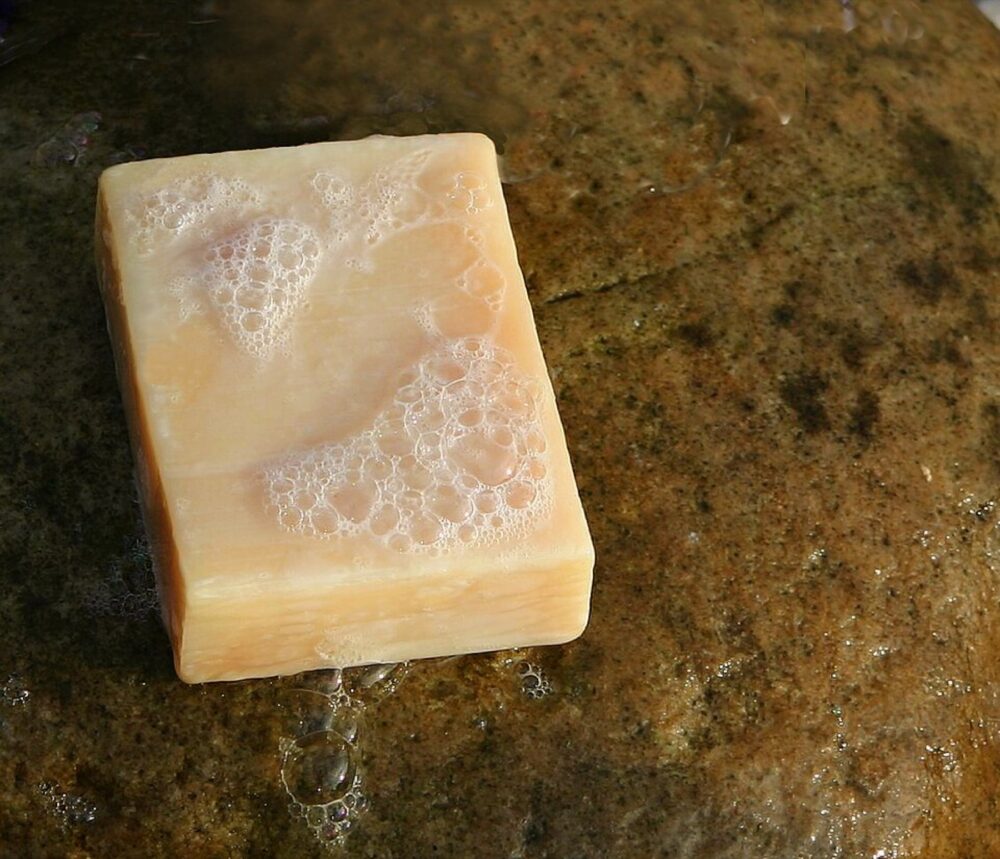
Wholesale turmeric soap is simply turmeric-infused soap sold in bulk to resellers: bars, cut loaves, or private-label runs that you put your own brand on. For a US buyer, the real decision is not “does turmeric help skin?” but: which formulation to carry, how much claim risk you’re willing to take on, and whether you can trust a supplier (local or overseas) to deliver consistent quality at a landed cost that still leaves margin.
Turmeric soaps are usually positioned for brightening and anti-inflammatory benefits, often blended with other actives like citrus, honey, oatmeal or kojic acid. You’ll see that mix both in US artisan bars and in Chinese private-label offerings such as Poleview Group’s turmeric soap line. But for resale in the US, your bigger issues are ingredient documentation, label compliance, and controlling per-bar cost across different wholesale channels.
What Wholesale Turmeric Soap Is and How the Supply Chain Works
In wholesale terms, turmeric soap is any soap product with turmeric (powder or extract) sold B2B in bulk quantities: full loaves, pre-cut bars, or OEM batches. You can see classic “loaf and bar” wholesale in US suppliers like Bulk Apothecary’s turmeric, orange & honey cold process soap, where loaves are meant to be cut, wrapped, and branded by the buyer.
From a formulation standpoint, you’ll run into three broad families:
- Cold-process bars – traditional oils (olive, coconut, etc.) saponified with lye, tinted and scented with turmeric and essential/fragrance oils. That’s the style used by many US bulk and artisan makers.
- Glycerin or “melt-and-pour” specialty soaps – clear or layered bars where turmeric is suspended in a glycerin base. For example, Wholesale Natural Body Care’s turmeric glycerin specialty soap uses clear/solid layers and highlights “lightening” in its marketing.
- Turmeric + active blends – bars that pair turmeric with kojic acid, citrus oils, honey, chamomile or oatmeal. Mountain Madness Soap’s turmeric bar combines turmeric and kojic acid, marketed for potential brightening and tone evening.
On the supply side, the chain typically looks like this:
- US bulk soap suppliers – make large loaves or pre-cut bars you can rewrap as your brand. Shorter lead times, higher per-unit costs.
- US and international artisan makers – small-batch makers selling wholesale packs (often 10-50 bars) via their own sites or platforms like Etsy wholesale pages.
- Chinese OEM/private-label manufacturers – factories that design and produce custom turmeric soaps, often with relatively low minimum order quantities (MOQs) and flexible shapes, scents, and packaging, as seen in Poleview’s private-label offerings.
If you’re building a brand, your choice among these is basically a trade-off between speed (US loaves), uniqueness and story (artisans), and scalability plus customization (OEM factories).
Judging Turmeric Soap Suppliers: Formulation, Claims, and Communication
Turmeric soap lives in a grey area between “natural skincare” and “problem-solving treatment,” and the supplier you choose will strongly influence how safe your marketing is.
Look closely at the ingredient story
Start with how the supplier talks about the bar:
- Bars like Mountain Madness’s turmeric and kojic acid soap emphasize “potential” brightening and recommend patch tests. That tone is closer to what many US regulators expect: cautious, not curative.
- Some suppliers, such as Wholesale Natural Body Care’s turmeric glycerin bar, lean into “lightening” or dark-mark language.
- US bulk loaf suppliers like Bulk Apothecary focus more on scent notes (turmeric, citrus, honey) and rebranding potential than medical claims.
For resale under your label, you want:
- A full ingredient list with INCI names.
- Clear base type (cold process vs glycerin) so customers know what they’re getting.
- Consistent batch photos and descriptions across the site — big changes from batch to batch are a red flag for long-term supply.
Treat skin claims as a regulatory risk, not a selling point
Many turmeric soap listings highlight acne, dark marks, or hyperpigmentation in their marketing. Editorial coverage like Who What Wear’s overview of turmeric soap benefits makes clear that these are “potential” benefits, not guaranteed outcomes.
As a US reseller, you should:
- Avoid promising treatment, cure, or dramatic “lightening” unless you’ve consulted a regulatory specialist.
- Keep copy in “cosmetic” territory (cleansing, smoothing, brightening appearance) rather than “drug” territory.
- Make sure any before/after photos or testimonials supplied by the manufacturer aren’t misleading.
Communication and documentation checklist
When you’re vetting a turmeric soap supplier, ask for:
- Recent COA or batch documentation for the base and key actives (turmeric, kojic, etc.) if you’re using strong claims.
- A mock-up of the ingredient panel that will go on your packaging.
- Clarification on whether they allow private-label branding and how they’ll appear (or not) on the final product.
Chinese OEM manufacturers like Poleview Group often advertise design help and low MOQs, which can be useful if you want custom molds, colors, and fragrance profiles. Just keep the conversation grounded in documentation: get ingredient breakdowns, sample photos, and clear terms on reformulating if your test batch doesn’t match your expectations.
MOQ, Pricing, Customization, and Choosing a Channel
You’ll see very different patterns for MOQ, customization, and landed cost depending on whether you buy domestic, cross-border factory, or marketplace multipacks.
How supplier types usually differ
Here’s a simplified comparison based on publicly visible turmeric soap offerings:
| Supplier type | Typical MOQ feel* | Customization options | Cost/lead-time pattern |
|---|---|---|---|
| US bulk loaf supplier | Modest (a few loaves) | Low – mostly scent/packaging on your end | Higher per bar, short US transit and lead |
| US/intl artisan wholesale | Small pack counts (10-50) | Moderate – fragrance, label, minor tweaks | Mid per bar, variable lead, story-driven |
| Chinese OEM/private label | Relatively low factory MOQ | High – shapes, colors, packaging, actives | Lower per bar at scale, longer cross-border |
| Online marketplaces (packs) | Very low (multi-packs) | Minimal – you rebrand or resell as-is | Mixed prices, fast for small tests, limited control |
*Heuristic, not a strict number; always confirm exact MOQ with the supplier.
US suppliers like Bulk Apothecary and other loaf sellers often work well if you want to:
- Test turmeric soap in your catalog with a few dozen to a few hundred bars.
- Control your own packaging and branding from day one.
- Avoid import logistics for your first experiment.
OEM factories such as Poleview Group’s turmeric soap manufacturer come into play when you’re ready to:
- Lock in a signature formula (e.g., turmeric + kojic + citrus) at scale.
- Customize bar shape, embossing, and boxed packaging.
- Trade longer lead times and freight complexity for lower production cost per bar.
Where marketplaces like DHgate and Etsy fit
Marketplaces are usually best for trial orders and mixed carts, not large OEM projects. You’ll find turmeric soaps and related body-care products in multi-packs on platforms like Etsy’s “tumeric soap wholesale” search, where artisan makers offer bundles you can test with limited commitment.
On DHgate’s side, a quick product snapshot taken on 2026-10-10 shows several turmeric soap and scrub listings sold in sets:
- Turmeric Soap Bar for Face Body… – handmade soap bars in a pack, price range around USD 37.29-38.72 per lot, with a visible 4.5 rating from 9 reviews.
- Lemon Turmeric Soap Handmade Deeply Cleansing… – 100 g bars, price range roughly USD 16.92-17.36 per lot, rated 5.0 from 3 reviews.
- 5Pcs Turmeric Soap Lemon… Kojic Soap – a 5-bar pack with citrus and kojic positioning, price range about USD 31.36-34.68, with a single 5.0 review.
Listings and prices change, but this kind of multipack is typical: you buy ready-made bars, often with bold brightening or acne language in the title. If you use DHgate that way, treat it as a test-bed and:
- Read all ingredient details in the listing, not just the headline claims.
- Check photos for consistency across different buyers’ images.
- Message the seller for batch-to-batch consistency and packaging options.
If you later decide to build a more formal cross-border supply chain, you can use DHgate as one of several places to identify potential manufacturers, then deepen vetting using broader guidance like the sourcing steps in Find wholesale suppliers on DHgate or Choose a DHgate wholesale supplier.
A simple cost-control example for a 100-300 bar test
For a small US brand, a realistic first move might be:
- Buy 1-3 turmeric soap loaves from a US bulk supplier such as Bulk Apothecary, cut and wrap under your label, and track sell-through and feedback.
- In parallel, order one artisan multi-pack via an Etsy wholesale listing and one cross-border multi-pack (for example, a DHgate turmeric bar set) to feel the differences in scent, lather, and customer reaction.
- Compare per-bar cost after shipping, plus comments on scent strength, staining (turmeric can tint washcloths), and irritation reports.
That small triangulation gives you real data on what your customers actually like before you commit to a customized OEM formula with longer contracts.