
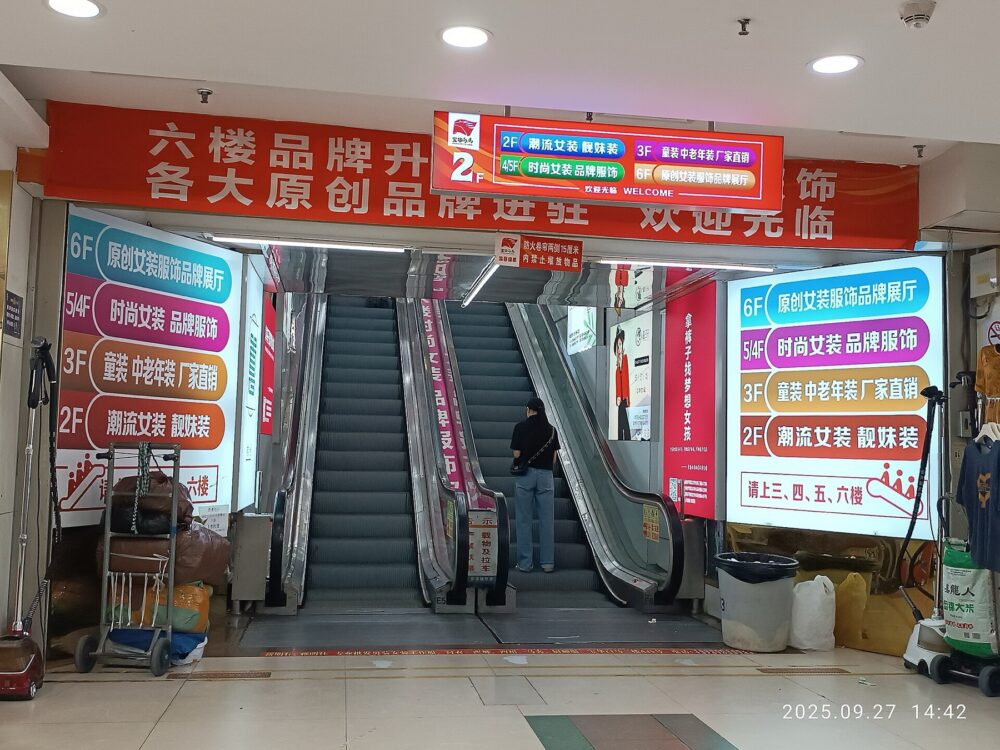
China’s wholesale clothing market is a vast network of factories, city-level clusters, physical markets and online platforms. It makes sense for US boutiques and ecommerce sellers who can handle minimum order quantities (MOQs), invest in sampling and quality control, and build relationships over several orders. If you’re hoping for tiny test runs, guaranteed quality, and zero hassle, it’s often better to start smaller or source closer to home.
This overview breaks down how the market is organized, how to evaluate suppliers, and how to choose between on-the-ground markets and online platforms like Alibaba, AliExpress, and DHgate.
How China’s Wholesale Clothing Market Is Structured
China is a leading global apparel manufacturer and exporter, with a clothing sector that ranges from budget basics to higher-end fashion. Instead of one single “China wholesale clothing market,” you’re dealing with a few layers:
1. Regional production clusters Cities and regions specialize:
- Areas around Guangzhou are known for fashion-forward womenswear, casualwear and mixed apparel.
- Zhejiang and nearby provinces supply a lot of knitwear, kids’ clothing and activewear.
These clusters feed into nearby wholesale markets and export channels.
2. Large physical wholesale markets Physical markets are dense shopping complexes where thousands of stalls sell ready-made clothing and sometimes take custom orders. Two of the most referenced hubs for overseas clothing buyers are:
- Yiwu International Trade Market (Futian) – A massive complex with sections for many product categories, including apparel. Overseas buyers commonly work through local sourcing agents here, who know the layout, language and typical pricing.
- Guangzhou clothing markets – A cluster of buildings and streets focused heavily on fashion apparel. They’re popular for trend-driven womenswear and mixed clothing categories. Many foreign buyers again lean on local agents or wholesale companies based there.
Industry resources such as Debutify’s guide to wholesale clothing in China and market roundups on sites like FOB Sourcify’s clothing wholesale market overview highlight these hubs without claiming they are the only options.
3. Online B2B platforms and directories Overseas buyers often never set foot in China; they source through online platforms that connect them to factories, trading companies or marketplace sellers. Common examples include:
- Alibaba
- 1688 (domestic Chinese, often used via agents)
- Global Sources
- AliExpress
- DHgate
These platforms differ in how B2B-focused they are and in typical order sizes, but they all expose you to the same underlying ecosystem: many competing producers, a wide spread of quality, and negotiable terms.
Finding and Evaluating Clothing Suppliers in China
The attraction of China for clothing is straightforward: relatively low production costs, abundant textile and trim supply, and intense competition among manufacturers. That competition creates variety and keeps pricing sharp, but it also means quality and reliability vary a lot from supplier to supplier.
For a small US retailer or ecommerce brand, supplier selection is usually the make-or-break step. Treat it like a funnel instead of a single choice.
Step 1: Narrow the field by product and region
Start with a clear brief: fabric type, garment categories, target quality level, initial order size, and any compliance needs (for example, children’s clothing regulations in the US). Then:
- For trend-heavy womenswear or mixed apparel, short-list suppliers tied to Guangzhou markets or nearby factories.
- For kidswear or knit-heavy collections, look at Zhejiang-area producers commonly mentioned in clothing market roundups.
On online platforms, filter by category (for example, dresses, hoodies, kids’ clothing) and scan supplier locations to see where they sit in that ecosystem.
Step 2: Use concrete verification signals
Instead of a generic “check reputation,” look for tangible signals:
For factory or trading company websites and physical-market stalls:
- Business scope and photos: Do their facility and product photos match your category (for example, yoga pants and T-shirts for an athleisure line)?
- Export focus: References to past shipments to Europe or America suggest they understand foreign quality expectations and basic documentation.
- Communication response: How fast and specific are answers about fabric composition, stitching, and packaging?
For online platform suppliers (Alibaba, DHgate, etc.):
- Product mix: Does the catalog focus on apparel, or is it a generic mix of everything? Niche clothing sellers tend to be more credible for long-term sourcing.
- Listing consistency: Compare several listings. Are size charts, material descriptions and photos consistent, or do they look copy-pasted from random sources?
- Review patterns: Don’t just count stars; look for detailed comments about fit, fabric weight, and color accuracy, especially on listings that match your target garments.
Step 3: Run a structured sampling process
Before you ever talk MOQ, treat sampling as a paid test:
- Order multiple samples of the same style to check production consistency (seams, labeling, fabric shrinkage after washing).
- Compare samples from 2-3 short-listed suppliers against each other and against a benchmark garment you like from an established brand.
- Stress-test communication while sampling: ask about labeling (country of origin, fiber content), packing, and potential custom changes like print placement.
For physical markets, many overseas buyers work through a local agent who can visit stalls, collect samples, and ship a consolidated box to you. Several sourcing firms and agent services mentioned in industry blogs and market guides offer that model; an agent is especially useful if you don’t speak Chinese or can’t travel.
A simple supplier vetting checklist
You can visualize supplier vetting as a short checklist:
- Clear match with your product category and quality level
- Evidence of exports to Western markets
- Responsive, specific communication about materials and construction
- Samples tested against your benchmark garment
- Willingness to document specs in a purchase order (fabric, measurements, tolerances)
If a supplier fails more than one of those, treat them as a one-off test rather than a long-term partner.
MOQ, Pricing, and Choosing Between Physical Markets and Online Platforms
China’s many clothing producers create a wide pricing band. You’ll see everything from very low-cost basics to mid-range pieces that can rival domestic wholesale prices in the US once freight and duties are included. The key is understanding MOQs and what you’re trading off with each sourcing route.
Typical MOQs and pricing drivers
Most clothing manufacturers and serious wholesalers will expect you to commit to a minimum quantity per style, color, or size breakdown. While exact numbers vary:
- Factory-direct orders for custom or semi-custom styles usually carry higher MOQs.
- Marketplace sellers offering ready-stock items often accept smaller orders but may have less control over production quality and replenishment.
Pricing is influenced by:
- Fabric choice and GSM (weight)
- Complexity of construction (for example, tailored jackets vs simple T-shirts)
- Customization (prints, labels, branded packaging)
- Shipping mode (express vs consolidated sea freight) and terms agreed with the supplier
For a small US buyer, the practical question is: Do you have the cash flow and storage for a true wholesale MOQ, or do you need to stay closer to retail quantities at first?
Physical wholesale markets vs online platforms
Here’s a high-level comparison tailored to small US apparel businesses:
| Route | Best for | Main advantages | Key trade-offs |
|---|---|---|---|
| Visiting physical markets (Yiwu, Guangzhou) | Buyers ready to place multi-style orders and potentially custom runs | Hands-on fabric inspection, fast sample pickup, direct negotiation with many vendors in one trip | Travel cost/time, language barrier, need for local agent, harder to manage ongoing orders from the US |
| Factory/contact via sourcing agents | Small brands wanting custom or semi-custom production but not traveling | Agent pre-vets suppliers, consolidates communication and quality checks, can access domestic-only platforms like 1688 | Agent fees, dependency on one intermediary’s diligence, varying transparency |
| Online B2B platforms (Alibaba, Global Sources) | Brand builders planning larger runs but starting with research online | Large supplier pool, detailed RFQs, better suited to negotiating bulk orders and custom specs | Requires careful vetting; quality and reliability vary; some suppliers push higher MOQs |
| Online marketplaces (AliExpress, DHgate) | Small ecommerce sellers testing styles with modest quantities | Access to many ready-made designs; often easier to place smaller trial orders than factory-direct | Often less control over production, specs may be lighter, you must manually verify seller reputation and sample quality |
On marketplaces like DHgate, you can sometimes find clothing sellers offering modest starting quantities in categories such as hoodies, tracksuits or dresses. For a US-based Amazon or Shopify seller, this can be a practical way to test whether a style sells before committing to factory-level MOQs. The limitation is that each seller operates independently: you need to vet them the same way you’d vet a stall in Guangzhou, by checking their catalog focus, reading reviews, and ordering samples before you rely on them for repeat wholesale supply.
Which route fits your situation?
For a small boutique testing a new aesthetic, starting with marketplace-ready pieces from online platforms and treating your first orders as extended sampling often makes more sense than flying to China. You accept slightly higher per-unit costs to avoid overcommitting.
For an emerging brand with a defined line and forecasted volume, investing in agent-supported sourcing from Guangzhou or Yiwu, or using B2B platforms to secure factory-direct production, can deliver better long-term margins. You’ll need to budget for sampling rounds, clear specs in writing, and realistic lead times and freight.
China’s wholesale clothing market rewards buyers who think like partners rather than bargain hunters: define your niche, build a short list, sample thoroughly, and then scale up with the suppliers who prove they can deliver consistent quality and honest communication.