
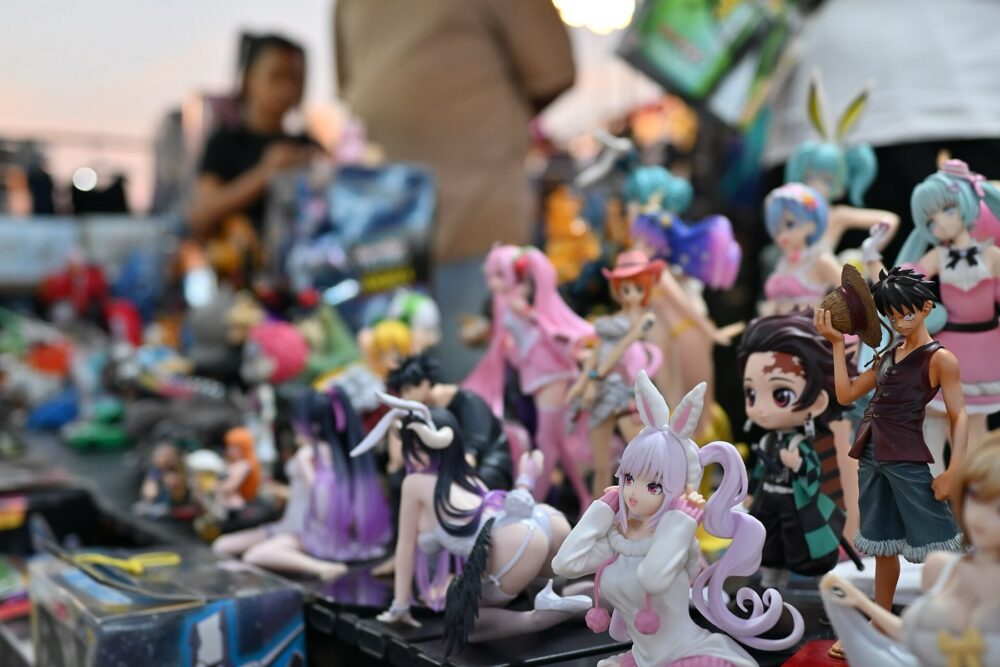
Japanese anime merchandise wholesale is built around licensing deals and layered distribution. For a US store, the real choice is whether you buy through Japan-based exporters, US anime wholesalers, proxy-shopping services, or global marketplaces. Each route affects what titles you can carry, your risk on authenticity, your minimum order size, and how hard shipping and customs will be.
How Japanese Anime Merchandise Wholesale Actually Works
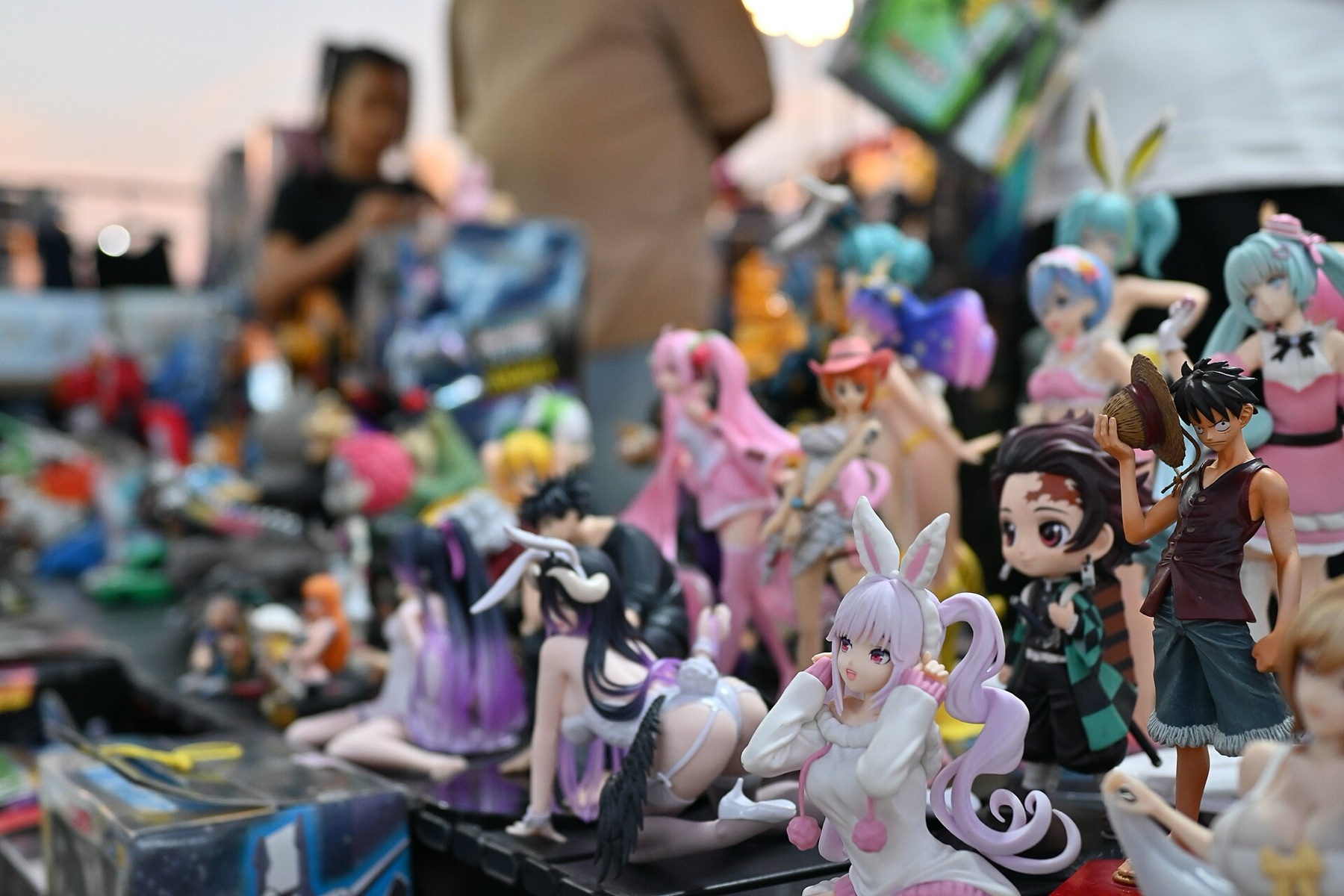
Japanese anime merchandise covers character goods tied to specific IP: prize and scale figures, blind boxes, plush, apparel, keychains, trading cards, posters, and more. These products start with Japanese rights holders and manufacturers; then licensed distribution partners move them into overseas markets.
Major Japanese trading companies have pushed into the anime goods business, forming partnerships to sell official merchandise abroad. Their role is often to coordinate licensing and export, while smaller specialized trading firms handle day-to-day shipments. An example is Tenshin Trading, a Japan-based firm that describes itself as bringing Japanese stories and related merchandise to international buyers.
From there, the supply chain usually looks like this:
- Japanese rights holder / manufacturer – approves product designs and production.
- Japan trading firm or exporter – aggregates inventory across titles and manufacturers, manages export paperwork.
- Regional distributor / wholesaler – imports into the US, handles customs, and sells by case or unit to retailers.
- Retailers and ecommerce shops – buy in bulk for shelves, online listings, and convention booths.
Digital sourcing platforms like FindGoods, based in Fukuoka, sit between steps 2 and 3. They position themselves as AI-powered anime wholesale sourcing, matching overseas buyers with Japanese suppliers while helping navigate catalogs and communication. For a US shop, this kind of platform can shorten the time between “I want official merch from series X” and “I have a supplier in Japan,” but it doesn’t remove the need to understand licensing scope and import rules.
The key takeaway: in anime, licensing drives everything. You’re not just buying generic T-shirts—you’re buying rights to sell a character on a T-shirt in a certain region. That’s why many small US shops rely on domestic distributors who already hold those rights rather than trying to secure them alone.
Choosing and Vetting Anime Merchandise Suppliers
You’ll encounter three main supplier types as a US buyer:
- Japan-based exporters and sourcing platforms
- US-based anime wholesalers/distributors
- Retail-focused proxy and resale channels
Here’s how each looks in practice and how to vet them.
1. Japan-based exporters and platforms
Examples include exporters like Tenshin Trading and sourcing tools such as FindGoods.
What they typically offer:
- Access to a broad catalog of Japanese character goods, sometimes beyond what US distributors carry.
- Potentially earlier access to new lines aimed at overseas markets.
- Direct contact with Japan-side partners.
Basic vetting steps specific to anime:
- Check licensor mentions. Look for language about official partnerships, licenses, or handling “official goods.” Don’t assume every item is licensed; ask for documentation when you’re unsure.
- Ask about territory rights. Confirm they’re allowed to sell into the US and that your resale won’t violate regional restrictions.
- Request product samples and packaging photos. For anime goods, packaging often includes logos or labels from the licensor or manufacturer; compare these with images from well-known retailers.
2. US-based anime wholesalers and distributors
Domestic partners remove a lot of friction for small US shops. Examples include:
- Harmmy Anime – a Los Angeles–based wholesale supplier and retail brand focused on anime collectibles and character merchandise.
- Isekai Distribution – specializes in wholesale anime merchandise for the US market.
- Culture Core Distribution – lists anime and pop-culture products for retailers.
Vetting questions tailored to these suppliers:
- What brands and IPs are in the catalog? Ask for a line list: figures, blind boxes, plush, apparel, trading cards, etc., broken down by series.
- How do they source? Clarify whether they import directly from Japan, buy from larger US distributors, or mix both. This affects price and how fast they can restock.
- Wholesale access controls. Many wholesalers gate their catalog with account requests or codes; that’s normal. Use that process to see case quantities, any pricing guidance, and upcoming drops.
- Convention and community presence. A wholesaler active in conventions and collector communities often knows which titles actually move in the US, which matters more than having a huge catalog.
3. Proxy-shopping and retail channels
Proxy services such as ZenMarket let overseas buyers purchase goods from Japanese retail stores and ship internationally. They’re useful if you:
- Want to test demand for a specific niche series with very small quantities.
- Need limited items that are currently only sold on Japanese retail sites.
But they’re not set up as true wholesalers. You’ll pay retail prices plus service and shipping fees, and you won’t get structured wholesale terms or US-focused pricing and returns. Use them as a scouting or micro-test tool rather than your main supply chain.
Quick supplier-type comparison
| Supplier type | Best for | Typical buyer fit |
|---|---|---|
| Japan exporter / platform | Broad, Japan-heavy assortments; niche IP | Growing shop ready for imports |
| US anime wholesaler | Mainstream series, steady restocks | New or small US stores |
| Proxy-shopping service | Tiny test orders, rare retail-only items | Experimenting with micro-batches |
Pricing, MOQs, Logistics, and Channel Trade-Offs
Anime wholesale decisions hinge on a few practical questions: how much you must buy, what you’ll pay per unit, and how hard it is to get the goods into the US.
Typical expectations by channel
Japan-based exporters / sourcing platforms
- MOQs: Often case-based, especially for figures and blind boxes. While precise numbers vary, expect to commit to full cases per SKU once you move beyond sampling.
- Pricing: You’re closer to the source, so unit prices can be competitive, but you’ll add international freight, customs brokerage, and duties.
- Logistics: You own import: classification, paperwork, and choosing air vs. sea. For small shops, this usually means consolidating shipments a few times a year.
US anime distributors and wholesalers
- MOQs: Usually lower and more flexible. Many will let a new account start with mixed-case or mixed-line orders over a modest total, rather than strict per-SKU MOQs.
- Pricing: Higher than Japan-direct on paper, but freight, customs, and currency risk are already baked in. For small volumes, total landed cost is often more predictable.
- Logistics: Domestic LTL or parcel shipments; you focus on store operations rather than import compliance.
Proxy services and retail imports
- MOQs: Essentially none—you can order a handful of items. But this isn’t wholesale.
- Pricing: Retail plus proxy fees and small-parcel shipping. Good for testing, poor for margin.
Where marketplaces like DHgate fit
Global marketplaces add a fourth route: buying anime-themed goods that aren’t always tied to a formal distribution chain. On 2026-10-09, DHgate listed multiple anime-style apparel and props from independent sellers, such as:
- Men’s T-shirt with Japanese anime characters offered in a price range around $48.20–$50.48 on that date.
- Halloween Japanese anime mask and role-playing helmet props with a snapshot price band of roughly $62.12–$70.80 on 2026-10-09.
- An anime manga hoodie with Japanese cartoon print that showed pricing around $20.72–$21.70 at the same time.
Prices and availability on marketplaces can change quickly, so treat these as one-time observations rather than stable offers.
When considering marketplace sourcing for anime-themed apparel and props:
- Look closely at product art and titles; avoid listings that appear to use trademarked characters without mentioning a license.
- Ask the seller about origin, licensing, and sample units before placing larger orders.
- Decide if you’re comfortable positioning these items as “anime-inspired” apparel and accessories rather than officially licensed character merch.
If you plan to make DHgate a real sourcing channel, broader DHgate guidance on this site—such as finding wholesale suppliers on DHgate or choosing a DHgate wholesale supplier—can help you build a more complete vetting process.
Channel trade-off table
The table below summarizes how the main channels differ on order size, logistics, and licensing control for a small US anime shop.
| Channel type | Order size & MOQ trend | Logistics burden for US shop | Licensing clarity for character goods |
|---|---|---|---|
| Japan exporter / platform | Case-based, higher per-SKU commitments | High: buyer manages international import | Medium: exporter may hold rights; buyer must confirm territory |
| US anime wholesaler | Lower MOQs, mixed assortments often allowed | Low: domestic shipping only | Higher: wholesaler typically works within US licenses |
| Proxy-shopping service | Tiny orders, effectively no MOQ | Medium: many small parcels | Variable: often retail goods; buyer checks item-by-item |
| Global marketplace (incl. Cross-border multi-seller) | Flexible; buyer sets quantity per listing | Medium: depends on each seller shipment | Low to variable: many “anime-inspired” items; licensing must be verified with seller |
A simple scenario comparison
Imagine you run a small US anime shop and want 100 units of mixed-character plush and blind boxes:
- Japan-direct exporter or platform: You might be asked to buy full cases per SKU and import via air freight. You’ll get strong variety and potentially some Japan-focused lines, but you’ll spend time on customs and need enough margin to absorb freight and duties.
- US-based wholesaler (e.g., Harmmy Anime, Isekai Distribution, Culture Core Distribution): You apply for wholesale access, choose a mixed assortment from their catalog, and receive a domestic shipment. You probably pay more per unit than Japan-direct, but you gain simpler logistics, clearer US pricing, and input from a partner who knows what sells locally.
For most small US shops, starting with domestic anime wholesalers and distributors is the least fragile path. As your audience and cash flow grow, you can layer in Japan-side exporters and occasional proxy buys to differentiate your assortment—using general marketplaces and DHgate listings sparingly for lower-risk apparel and props where licensing is clear or purposely avoided.