
If you’re sourcing Chinese children’s clothing wholesale for a US business, your realistic choices fall into four buckets: low‑volume marketplaces like DHgate, manufacturer‑focused B2B platforms, direct factory relationships, and offline markets or trade shows. DHgate tends to fit test orders, small wholesale, and broad assortments at lower minimums. Larger, fully branded runs usually push you toward direct factories or platforms like Alibaba or Made‑in‑China, but require more work: tech packs, compliance checks, and negotiation. Your best route is the one that matches your order size, customization plans, and how hands‑on you’re willing to be.
How Chinese Children’s Clothing Wholesale Is Structured
Children’s apparel from China isn’t a single supply chain; it’s a stack of different business models:
- Direct factories focus on specific categories (e.g., puffer jackets, knit sets) and look for larger, repeat orders.
- Apparel groups and trading companies bundle multiple factories and handle sourcing for you.
- B2B platforms like Alibaba or Made‑in‑China list manufacturers aiming at bulk and customization.
- Low‑volume marketplaces like DHgate focus more on ready‑made SKUs and smaller wholesale lots.
- Fulfillment or dropship services let you sell kids’ clothing without holding inventory.
Competitor research on China apparel sourcing (for example, the supplier‑type breakdown on HAPA Garments) makes the key point: these routes are not interchangeable. A factory that’s great at 5,000 custom parkas may be a terrible fit if you need 100 mixed‑size cotton pajama sets.
Children’s clothing adds extra wrinkles:
- Safety and fabric: you’ll care more about fiber content and construction (choking hazards, drawstrings, flammability) than with adult fashion basics.
- Sizing and growth: Chinese size scales differ from US kids’ sizing, and parents expect consistent fit across your catalog.
- Seasonality and age bands: baby, toddler, and grade‑school each move at different speeds; you may need more SKUs in smaller volumes.
That’s why many US small brands start on flexible marketplaces to learn which sizes and styles move before they lock in a factory route.
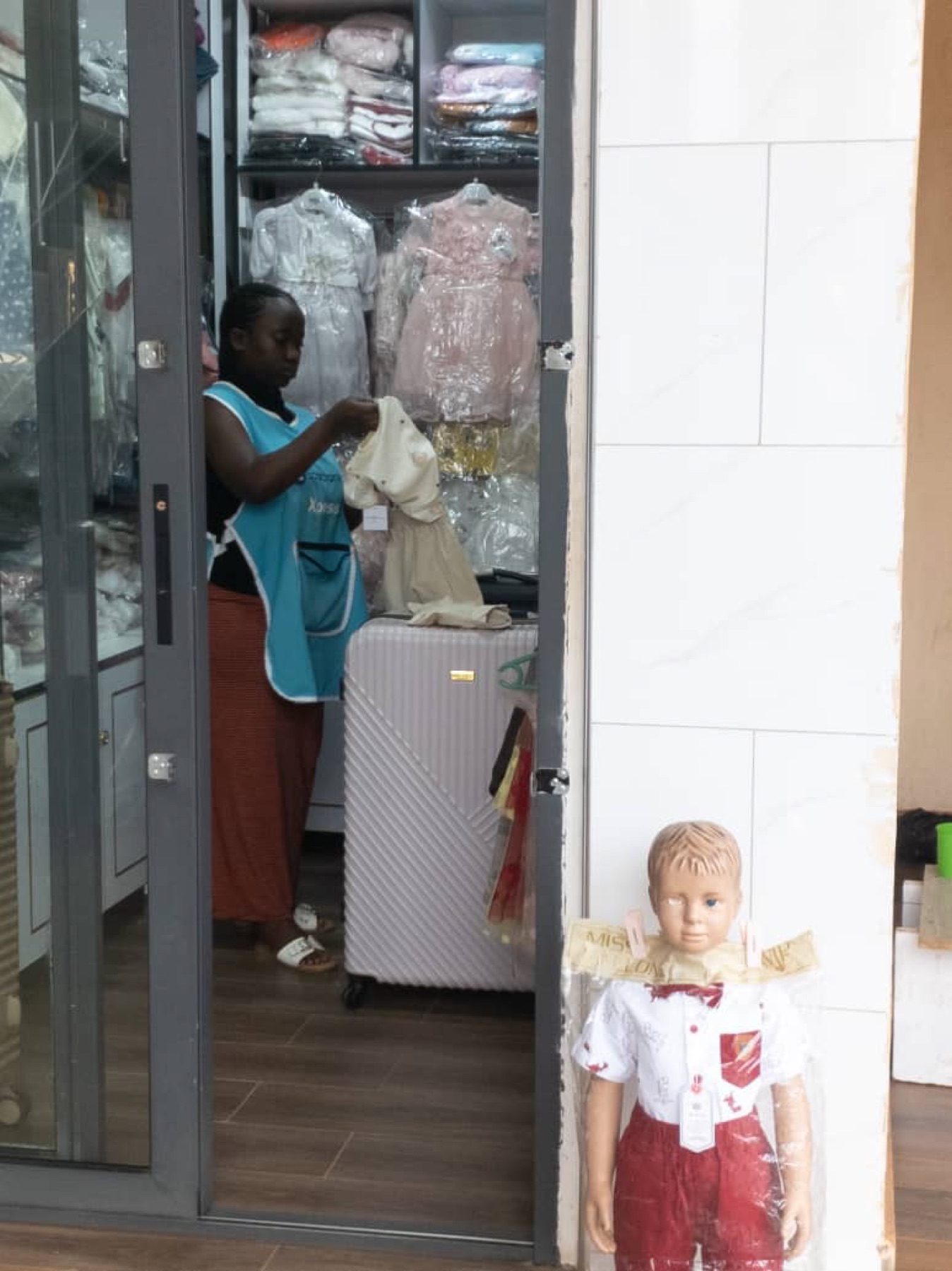
Retail-assortment reference only; this Creative Commons photograph does not depict a DHgate seller, listing, or Chinese factory.
Choosing Suppliers and Channels by Volume, Customization, and Workload
Think in three bands: test batches, small wholesale, and larger branded runs. Each band points to different supplier types and buyer workload.
1. Test batches (roughly 20-200 units total)
You’re validating demand: a capsule kids’ line on Etsy, Amazon, or your own site.
Realistic routes:
- Low‑volume marketplaces (DHgate, AliExpress‑style sites): Flexible MOQs, many SKUs, minimal upfront process.
- Small trading companies on B2B platforms: Some will entertain 100-200‑piece first orders.
Workload and trade‑offs:
- You’ll spend more time filtering listings than negotiating contracts.
- Styles and labels are mostly non‑customized; you’re buying existing designs.
- You must manually check size charts and fabric descriptions and do spot testing for safety.
2. Small wholesale (hundreds of units across styles)
You’re restocking what sells, maybe starting to standardize colors and fits.
Realistic routes:
- Marketplaces with higher‑tier sellers: Some sellers specialize in children’s clothing and will quote better tiers for repeat buyers.
- Niche apparel groups or agents: They aggregate factories and can keep MOQs reasonable.
- Manufacturer‑focused platforms: You can begin talking to factories willing to accept moderate MOQs if you commit to reorders.
Workload:
- More email and spec clarification (exact fabric, trims, labeling, packaging).
- You may start requesting simple customization like colorways or hangtags.
- You’ll track lead times and plan around seasons (e.g., winter coats from China need longer runway).
3. Larger branded runs (1,000+ units and custom designs)
You want original designs, your own label, and consistent quality.
Realistic routes:
- Direct factories found via B2B platforms or agents. You’ll usually need tech packs and clear compliance requirements.
- Apparel groups handling production and QC across multiple children’s categories.
Workload:
- High. You’ll manage sampling, fit approvals, fabric quality, and compliance for US standards.
- You’ll likely sign formal contracts and negotiate terms over several rounds.
For any route, you still need to vet suppliers. For kids’ apparel specifically, a micro‑checklist that’s actually useful looks like this:
- Ask for fiber content and fabric weight for each SKU (e.g., 100% cotton, 200gsm) and avoid vague descriptions.
- Request size tables including height/weight guidance, not just “3T/4T/5T” labels.
- Get photos of inside construction (seams, buttons, snaps) to spot potential safety issues.
- Start with one controlled trial order across several sizes and wash‑test a few pieces before scaling.
DHgate and Alternatives: Where Each Channel Fits for Kids’ Wholesale
DHgate’s own editorial positioning describes it as a China‑based wholesale marketplace aimed at small and medium buyers, with generally lower minimums than large B2B sites and a wide clothing catalog that includes kids’ apparel.Source That matches what you see in live listings: lots of ready‑made children’s styles sold in smaller lots, each seller setting their own rules.
A quick DHgate snapshot taken on 2026-10-09 illustrates how this plays out for kids’ clothing (prices are ranges and may change):
| DHgate listing (2026-10-09) | Category | Price range (USD) | Observed fit for buyers |
|---|---|---|---|
| Kids baby boy camo hoodie | Kid’s Hoodies & Sweatshirts | 17.88-18.73 | Single toddler style; good for test batches |
| Casual boys summer 2‑piece set | Clothing Sets | 49.95-55.09 | Seasonal sets where you mix sizes |
| Tang dynasty kids costume | Ethnic Clothing | 36.29-42.06 | Niche ethnic style for events or holidays |
| Autumn kids hoodie top | Kid’s Hoodies & Sweatshirts | 12.77-26.75 | Everyday hoodie; broad price band to compare tiers |
| Cartoon pajama sets | Others Apparel / Sleepwear | 14.10-17.42 | Sleepwear sets for mixed‑size wholesale |
None of these listings show a platform‑wide MOQ rule; each seller chooses quantity bands and pricing. That’s useful if you want, say, 24-60 pieces in mixed sizes rather than committing to several hundred of one SKU.
Where DHgate tends to fit
Based on DHgate’s own editorial and the listing behavior above:
- Best fit:
- Test batches and early small wholesale for kids’ everyday wear, hoodies, sets, and sleepwear.
- Assortment‑driven businesses that need many SKUs in smaller lots (boutiques, early Amazon sellers).
- Less ideal:
- Deep customization of children’s clothing (original patterns, custom fabrics, complex compliance programs). B2B platforms and direct factories handle that better.
- Very large, standardized runs where price is negotiated at scale. Here, manufacturer‑focused routes typically offer more leverage.
By contrast:
- Alibaba / Made‑in‑China: better once you have clear specs and want factories to produce custom or semi‑custom runs. Expect higher MOQs and more negotiation.
A practical way to use these routes together:
- Prototype on DHgate: validate which sizes, colors, and categories move in your store via small batch purchases.
- Shortlist reliable sellers using DHgate‑specific research (ratings, repeat orders). If you want more platform detail, you can explore DHgate‑focused guides like finding wholesale suppliers on DHgate or choosing a DHgate wholesale supplier.
- Move proven styles to factory routes via Alibaba or agents once your volume and customization justify the extra workload.
Before choosing a DHgate supplier, use Find DHgate suppliers.
Used this way, DHgate is not a universal solution, but a low‑friction starting point in a broader children’s clothing sourcing strategy from China.