
If you’re a US-based buyer or small ecommerce brand looking for high-quality yellow round stickers in bulk, start by matching the sticker material and adhesive to how you’ll actually use them, then narrow your search to label-focused suppliers that can prove consistent color and print quality. For many small businesses, that means: paper or fluorescent dots from color-coding specialists for inventory and organization, thermal-compatible yellow labels for logistics, and vinyl stickers for durable packaging or outdoor use. Once your spec is clear, you can compare domestic label vendors, big-box retailers, local printers, and cross-border marketplaces, and then request samples before committing to a large run.
Yellow Labels and Round Stickers in Wholesale: Uses, Materials, and Market Structure
For sourcing, “yellow labels and stickers” is a broad category that includes everything from tiny color-coding dots to thermal shipping labels and outdoor branding decals.
Common business use-cases
- Color-coding and inventory: warehouses and small shops often use bright yellow dots to mark priority stock, sale items, or bins. Label specialists like ChromaLabel’s yellow dot stickers offer round yellow dots in multiple diameters specifically for organizing and decluttering.
- Office and retail organization: sites such as JAM Paper’s yellow labels sell yellow labels in multiple shapes and sizes for folders, price tags, and general filing.
- Shipping and logistics: if you print barcodes or addresses on-site, yellow direct thermal labels (for compatible thermal printers) are used to highlight priority shipments. OnlineLabels’ yellow direct thermal materials illustrate how these are positioned for logistics applications.
- Branding and packaging: yellow can be part of your brand palette on boxes, mailers, and product packaging. Vinyl stickers, such as the yellow vinyl options shown by StickerShop, are marketed as weather-resistant, so they’re common for reusable packaging, outdoor signage, and merch.
From a wholesale perspective, the market is split between:
- Specialist label vendors (OnlineLabels, ChromaLabel, JAM Paper, Avery, etc.) offering a wide menu of materials, sizes, and printer compatibility.
- General office/warehouse suppliers like Uline’s yellow label search results, plus Amazon/Walmart, which carry multi-purpose yellow label sheets and sticker paper.
- Custom-print shops and online printers that will print your design on yellow media, often with higher setup costs but more control over color and finish.
- Cross-border marketplaces where you’ll find a variety of generic colored labels and stickers, usually with lower unit costs but more work verifying each seller.
Understanding this structure helps you decide whether you’re buying a standardized commodity (e.g., 1″ yellow dots for bin coding) or a branded, custom-printed yellow label that justifies more design and proofing effort.

Shape reference: this public-domain graphic shows the round yellow format, not a physical adhesive product.
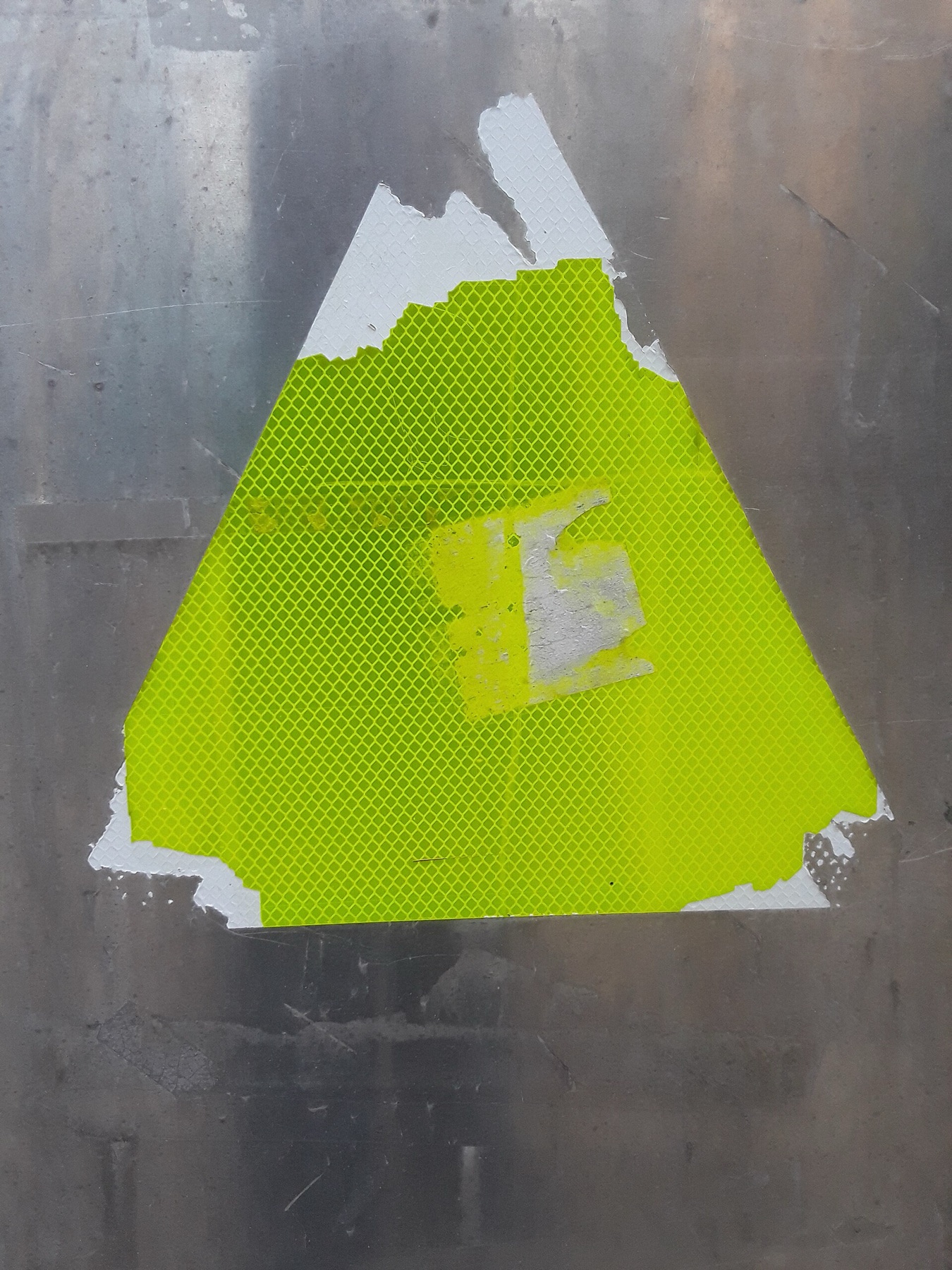
Durability example: this applied yellow sticker is not round, but its weathering illustrates why adhesive and surface testing matter.
Choosing and Vetting Suppliers for Yellow Round Stickers
For yellow stickers, low quality shows up quickly: colors look dull or inconsistent, labels peel off boxes, or they jam your printer. You avoid that by focusing your supplier checks on three things: material, adhesive, and print/ink compatibility.
Key material choices
- Standard paper labels: usually the lowest unit cost and fine for short-term uses like internal bin labels or temporary price tags. Check how the supplier describes the face stock (e.g., matte paper) and whether labels come on sheets vs rolls.
- Fluorescent/bright yellow paper: good for attention-grabbing alerts or sale stickers. OnlineLabels’ fluorescent yellow materials show this as a distinct material type; verify that “fluorescent” refers to the actual face stock, not just the product mockup.
- Direct thermal yellow: chemically coated paper labels that print without ink in a direct thermal printer (common for shipping, pick tickets, and barcodes). If you buy yellow direct thermal rolls, confirm printer compatibility and core size, and expect higher per-label quality sensitivity because the coating and printer must match.
- Vinyl yellow stickers: more durable and flexible, often used where the sticker might see moisture or handling. DHgate’s editorial blog notes that high-quality vinyl plus advanced printing (such as UV-resistant inks) improves durability and color vibrancy, which aligns with how StickerShop’s yellow vinyl is positioned for outdoor or high-use scenarios.
Adhesive and use environment
You’ll usually see three adhesive types described:
- Permanent: strongest bond; good for boxes, envelopes, and long-term inventory labels. Harder to remove cleanly.
- Removable: designed to peel off without damage; useful for temporary sale dots or rental equipment tags.
- Repositionable: can be moved a few times; helpful for planners, calendars, or reusable bins.
A practical vetting step is to ask for samples or a small test run, then stick them on the exact surfaces you use: corrugated boxes, plastic bins, poly mailers, glass jars. Let them sit for a few days, then check:
- Do edges lift or curl?
- Does yellow fade or change under light?
- Does inkjet or laser printing smear or flake?
DHgate’s sticker-quality editorial content also emphasizes that durable materials such as vinyl and good adhesives matter when stickers face weather or frequent handling; this concept applies equally to yellow labels used outdoors or on reusable packaging.
Print method and color consistency
Sticker quality also depends on how you’ll print on them (if at all):
- For blank labels you print yourself, verify that the product specifies compatibility (laser, inkjet, thermal). Label specialists like Avery’s bright yellow blank labels typically call this out; use that level of detail as a benchmark when evaluating less descriptive listings.
- For supplier-printed designs, ask how they manage color: CMYK vs spot color, proofs, and any limitations on bright yellow coverage. Many durable sticker brands emphasize advanced printing and UV-resistant inks to combat fading, echoing the DHgate blog’s point that printing technology affects how long colors stay vibrant.
To keep your vetting practical, focus on these signals:
- Clear material naming (paper vs vinyl vs thermal) and adhesive type.
- Detailed printer compatibility if you’ll print in-house.
- Availability of samples or low minimum test orders.
- Photos that show real-life color (not just a generic bright mockup).
Order Size, Customization, and Sourcing Channels (Including Cross-Border Marketplaces)
Once you know what you need, pick the sourcing channel that matches your volume, customization level, and risk tolerance.
Channel fit by buyer scenario
The table below aligns typical US buyer scenarios with practical sourcing channels and yellow-sticker choices. It focuses on how different suppliers handle bulk yellow labels, not on platform policies or guarantees.
| Buyer scenario (US-based) | Likely volumes & needs | Better-fit channels for yellow stickers | Why these yellow labels work well |
|---|---|---|---|
| Etsy seller shipping 50-500 orders/month | Branded packaging labels, moderate customization | Specialist label vendors; online custom sticker printers | Access to bright yellow rounds on paper or vinyl, plus design upload and print proofs. |
| Small warehouse color-coding bins | Standardized yellow dots, quick replenishment | ChromaLabel-style dot suppliers; office/warehouse suppliers (e.g., Uline, Walmart) | Pre-cut yellow round dots and rectangle labels in multiple sizes for inventory coding. |
| Subscription box brand scaling up | Large runs, custom art, cost-sensitive | Custom-print shops; cross-border marketplaces | Ability to negotiate unit pricing on big batches of branded yellow stickers and labels. |
| Pop-up event or short promotion | One-time use, minimal lead time | Big-box retailers; Amazon/Walmart | Off‑the‑shelf yellow labels and sticker paper; easy to buy a few packs quickly. |
| Growing online shop testing new packaging | Trial quantities, learning what sticks and looks right | Domestic specialists for first test; cross-border marketplaces for later scale | Start with high-clarity specs; move to lower-cost bulk once material and adhesive are proven. |
Domestic label specialists vs general retailers
If you’re printing barcodes, shipping labels, or branded packaging, specialist label vendors (OnlineLabels, ChromaLabel, JAM Paper, Avery, etc.) are usually the easiest starting point. They typically:
- Offer multiple yellow materials (including direct thermal, fluorescent, and true-yellow papers, as shown by OnlineLabels’ true yellow options).
- Provide templates and printer guidance.
- Support sheet and roll formats for different equipment.
For quick, low-stakes buys—a school fundraiser, a one‑off warehouse project—general retailers like Walmart or office-supply chains are fine. For example, Walmart’s craft and office sections list yellow sticker paper and related label stock, which can cover basic organization needs without working directly with a specialist vendor.
Custom-print shops
If your yellow round stickers carry your logo or brand art, a print shop or online custom sticker service gets you:
- Better control over exact brand yellow.
- Options for vinyl and special finishes (gloss, matte, clear).
The trade-off is higher upfront cost and minimums. Many brands start with a limited run to validate the design and adhesion before ordering larger quantities.
Where cross-border marketplaces (including DHgate) might fit
Cross-border marketplaces can be useful if you’re chasing very low unit costs or need a wide range of generic colored labels. For example, a DHgate listing titled “Waterproof Colored Labels Stickers Color Coding Self Adhesive Logo Inventory File Organization Solid Tags Address Classification” (snapshot observed 2026-10-09) shows waterproof colored labels marketed for color coding and inventory/file organization. This kind of listing can be relevant if you want bulk yellow labels as a commodity input and are comfortable doing extra vetting.
If you explore DHgate or similar marketplaces for yellow round stickers:
- Treat every listing as unique—check product titles, material descriptions, and photos carefully.
- Use any visible price range and quantity information as a rough guide only; offers and availability can change.
- Start with a small order or sample if the seller offers it, then test adhesion and color on your own packaging or bins before scaling.
If you decide to go further with DHgate suppliers specifically, there is buyer-focused advice on evaluating marketplace sellers in Find wholesale suppliers on DHgate, which covers how to approach cross-border sourcing decisions and seller checks.
Practical Next Step for US Buyers
To make your next bulk yellow sticker order safer and more predictable:
- Write a one-line spec: e.g., “1″ round bright yellow permanent dots for warehouse bins, compatible with hand-writing marker.”
- Shortlist 2-3 suppliers in the channel that best matches your volume (domestic specialist, general retailer, printer, or cross-border marketplace).
- Order samples or a small batch, and run a simple test: stick, write or print, wait a few days, check color and adhesion.
You’ll spend a bit more time up front, but you’ll avoid pallets of round yellow stickers that don’t stick, don’t print cleanly, or don’t match the yellow your brand depends on.