
Bulk CD and DVD packaging is cheapest when you match the format to your project, avoid overbuying features, and choose a sourcing channel where total landed cost (product + printing + freight + fees) is actually lower, not just the sticker price per case.
For many small US buyers, bare plastic jewel cases or simple paper sleeves sourced domestically are often the lowest-cash option. Higher-end digipaks or multi-disc boxes cost more because they use more material and print finishing, but they can be good value when bundled with duplication and artwork through a specialist provider. Cross-border marketplaces can be cost-effective for storage wallets and organizers if you’re buying enough volume to offset international shipping.
How CD and DVD Cases and Packaging Drive Your Total Project Cost
CD and DVD packaging does two jobs: it physically protects discs from scratches, dust and environmental exposure, and it carries your artwork and information so the disc can be sold, gifted or archived professionally. Industry packaging overviews from companies like Total Media Inc. treat the case and printed elements as a single cost line because they’re tightly linked.
Common formats include:
- Standard plastic jewel cases (single or multi-disc)
- Paper or poly sleeves with or without windows
- Card wallets and mini-jackets
- Digipaks (cardboard book-style with plastic trays)
- Multi-disc boxes and slipcases for sets
Each format changes your cost structure:
- Product cost: raw case or wallet price. Sleeves and simple wallets sit at the lower end; digipaks and multi-disc sets are typically higher because they use more material and more complex construction, as seen in packaging lineups from CD-Duplication.com.
- Printing and finishing: jewel cases with a simple front insert and tray card require less print area than a 6‑panel digipak with special coatings. Providers like Blank Media Printing list different panel counts and finishes, each adding incremental cost.
- Assembly/handling: stuffing discs into sleeves or cases, shrink‑wrapping, and adding stickers. Turnkey duplication houses roll this into per‑disc pricing; if you buy bare cases, you or your team absorb the labor.
- Shipping and storage: jewel cases are rigid and bulky; 1,000 of them take far more space than 1,000 thin sleeves. You’ll pay more to ship and store hard plastic, especially cross‑border.
- Duties, tariffs and fees: importing bulk plastic cases can trigger customs charges and brokerage fees. You need to factor these on top of freight when comparing international versus domestic sourcing.
Mini‑budgeting checklist for a small run (around 300 discs):
- Decide the format (sleeve vs jewel case vs digipak).
- Get quotes for cases + printed artwork + assembly.
- Estimate shipping: domestic ground vs international parcel.
- Add a buffer for import fees if sourcing abroad.
Even on a small release, the difference between a jewel case and a digipak can move your per‑unit cost enough to matter.
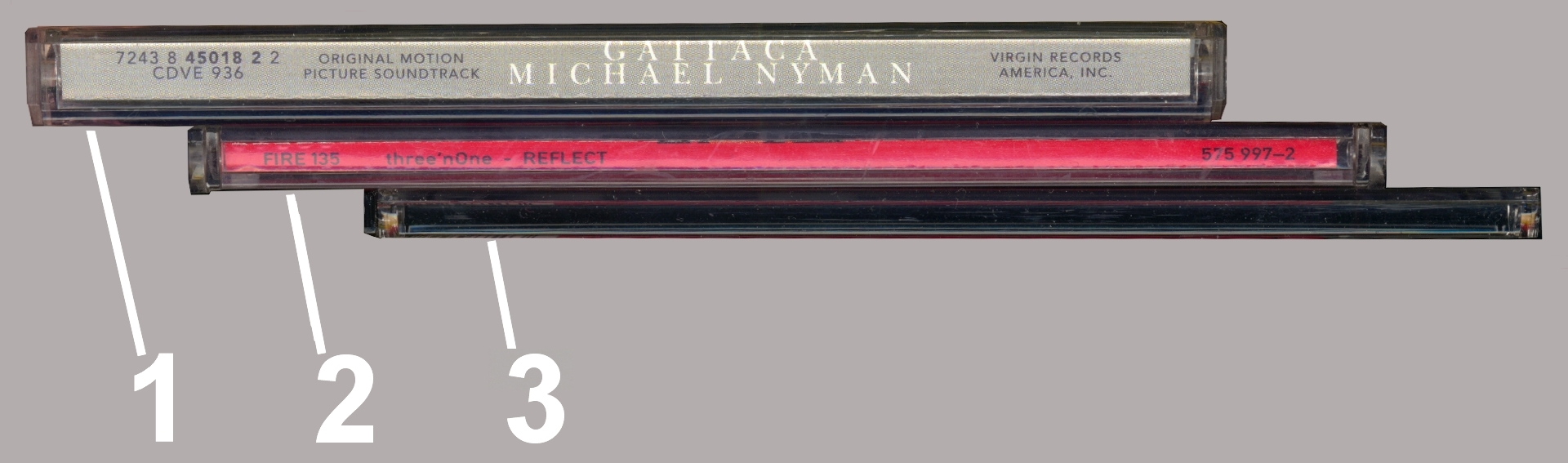
Standard jewel case, CD single case, and slim case shown side by side. Photo: Ocrho, public domain.
Why Some Packaging Costs More: Key Price Drivers and Tradeoffs
Across packaging catalogs like CD-Duplication.com and Disc Makers, you see the same pattern: more material and complexity usually means a higher typical price.
1. Materials and durability
- Plastic jewel cases: rigid, good everyday protection, but prone to cracks. Material cost is moderate and very standardized.
- Paper sleeves and card wallets: minimal plastic, cheaper material, but less impact protection and easier to bend or tear.
- Digipaks and specialty boxes: thicker board, plastic trays, coatings and sometimes booklets glued in. More inputs mean higher cost, but also a more premium feel.
Tradeoff: For budget projects where discs won’t be handled heavily (promos, software, backups), sleeves or wallets may be cheap but adequate. For products you’re selling or shipping to fans, jewel cases or digipaks offer better perceived value and protection.
2. Disc capacity and format complexity
Disc Makers’ multi‑disc packaging shows how cost tends to rise with capacity: 2‑disc, 4‑disc, box sets and slipcases all add more trays or pockets. That extra plastic or paper, plus spine labeling and inner artwork, typically raises unit cost.
If you can keep content on fewer discs or move some bonus material to downloads, you can stay in simpler, cheaper packaging formats.
3. Customization and artwork
Specialist providers such as Blank Media Printing commonly offer:
- Full‑color printing on disc faces
- Multi‑panel inserts and booklets
- Coatings (UV, glossy, matte)
Every extra panel or finish is an incremental cost. Budget tactic: reserve complex artwork for outer visible surfaces and keep inside panels and the disc face simpler.
4. MOQ, timing and waste
Most printers and duplicators offer price breaks at higher quantities. Ordering too few units keeps your per‑disc price high; ordering too many risks unused discs and wasted cash.
For events or corporate training, aim for a quantity you’re confident you’ll use within 6-12 months. If your content changes frequently, lean toward cheaper sleeves and smaller batches to avoid obsolete inventory.
Channel Choices: Finding the Cheapest Viable Source
You can source CD/DVD cases and packaging in three broad ways. The cheapest viable option depends on how much you value convenience, presentation and flexibility.
US duplication and packaging specialists
Companies like Blank Media Printing, Total Media Inc. and CD-Duplication.com sell turnkey bundles: disc duplication, printed artwork, packaging, and assembly in one quote.
Cost profile:
- Typically higher unit prices than buying bare cases.
- Lower coordination cost: one vendor handles print specs, case compatibility and assembly.
- Domestic shipping for US buyers and predictable duties when production is US‑based.
These are strong value for commercial releases, where presentation and reliability matter more than chasing the lowest per‑case cost.
Domestic bulk and office/warehouse suppliers
US wholesalers and office‑supply channels commonly sell:
- Blank jewel cases (standard or slim)
- Spindles and sleeves
- Simple storage boxes
Here you’re buying commodity packaging, usually without custom printing. For backups, internal training and software media, this can be a low‑cost route with straightforward shipping and little import complexity.
Cross‑border marketplaces (including DHgate)
Marketplaces that connect you with overseas sellers can be cost‑effective for storage wallets, binders and organizers, especially at higher volumes. DHgate is one example of this type of marketplace.
The table below shows a snapshot of several DHgate listings for disc storage solutions as of 2026-10-08 (prices and availability can change):
| Example product (anchor text) | Type / capacity | Price range (USD) |
|---|---|---|
| 80 Pcs CD Case Capacity CDs Holder Storage Box | Fabric square case, holds about 80 discs | 39.28-40.29 |
| Disc Storage Bags 40pcs Capacity CD Case | Zippered pouch, about 40 discs | 28.73-29.91 |
| CD Storage Case Portable CD DVD Case 160 Capacity | Round zip case, about 160 discs | 59.74-61.28 |
| 80pcs Capacity Disc CD Bag DVD VCD Wallet | Hard EVA wallet, about 80 discs | 81.79-83.9 |
| CD Case 20 Capacity Hard Plastic DVD Case | Compact case, about 20 discs | 25.23-25.89 |
These examples illustrate a range of capacities and materials (fabric, EVA hard shells, plastic) at bulk‑oriented price ranges. To keep your budget on track when considering marketplace options:
- Check each product’s seller rating and review count, since build quality and real‑world capacity can vary.
- Confirm dimensions and materials so cases fit existing shelves, vehicles or racks.
- Compare the total landed cost, including international freight and any import fees, against domestic suppliers.
Practical Ways to Cut Packaging Spend Without Hurting Quality
You can trim your CD/DVD packaging budget without undermining basic protection.
1. Pick the simplest format that still protects the disc
For discs shipped in padded mailers or stored in binders, sleeves or wallets often suffice. Reserve jewel cases and digipaks for products that sit on shelves or are handled repeatedly.
2. Bundle where it makes coordination cheaper
For commercial or band releases, getting duplication + printing + packaging from one US specialist can reduce errors and reprints, even if the unit price looks higher than buying bare cases and printing locally.
3. Use capacity wisely
CD and DVD storage solutions—from jewel cases to wallets and boxes—come in many capacities. Editorial guidance on storage boxes for CDs highlights capacity, material, durability, dust/moisture protection, design and price as key buyer considerations. Overbuying huge cases for a small collection wastes money and space; underbuying forces you into multiple cases and extra cost.
4. Time purchases to avoid rush premiums
Short‑notice projects limit your sourcing options and can push you into expensive expedited freight. If you know a release or training rollout is coming, get quotes and place packaging orders early so you can choose slower, cheaper shipping.
5. Consider environmental and end‑of‑life costs
From a pure unit‑price angle, cheap plastic often wins. But if you cycle through lots of discs, factor in recycling or disposal. Simple sleeves and card wallets reduce plastic waste; hard plastic cases may require specialized recycling services, which adds handling cost later.
As a rule: decide the lowest tier of protection and presentation that still fits your project, then compare domestic bare‑case pricing, turnkey duplication bundles, and any cross‑border wallet/case options on total landed cost, not just the per‑case headline.
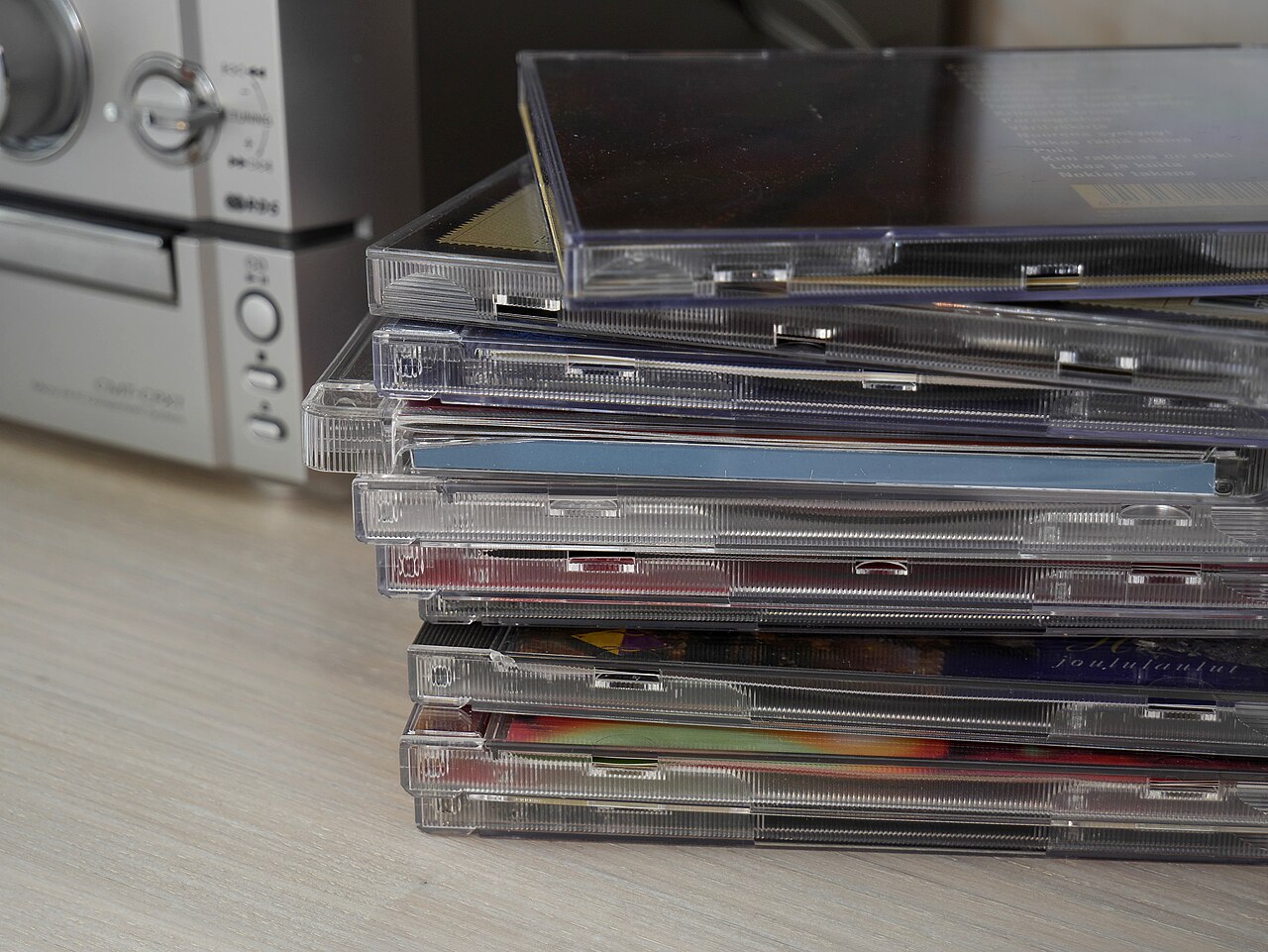
A stack of music CDs in jewel cases. Photo: Santeri Viinamäki, CC BY-SA 4.0.