
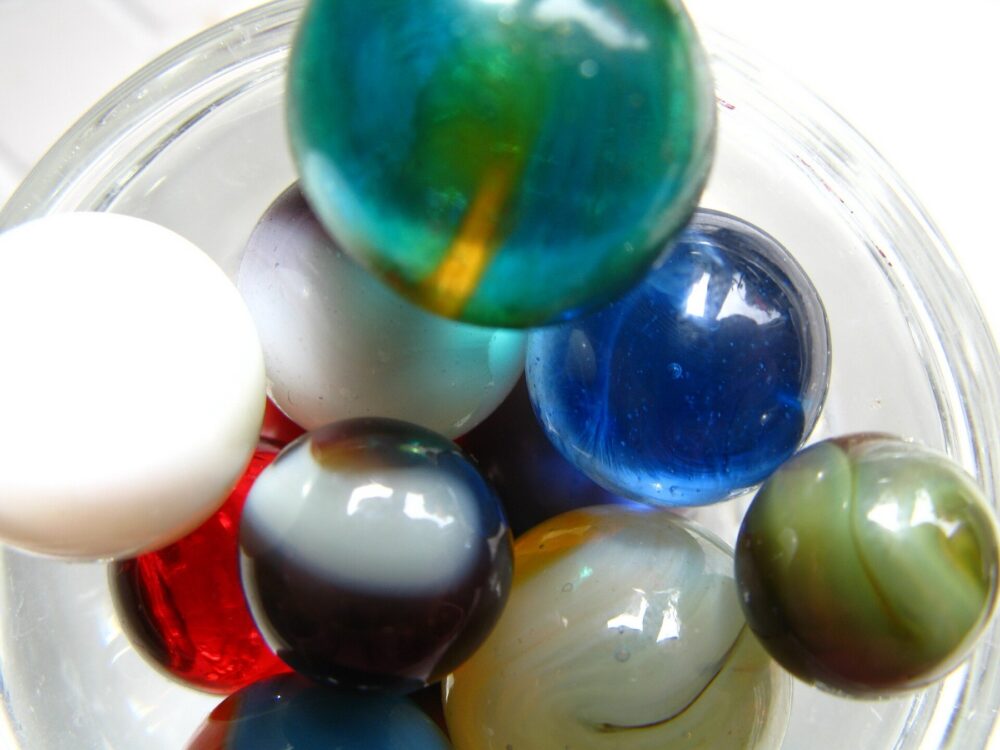
If you want bulk glass marbles for a game, classroom, or resale, DHgate can connect you to mainly Chinese suppliers and manufacturers, but you have to do the legwork to find good listings and verify sellers. The practical path is: use specific search terms like “glass marbles” or “game marbles”, apply filters, drill into listing details (size, count, finish, photos), then check seller ratings and reviews and request samples before committing to a large order. For highly specialized collector-grade marbles or very exact color sets, you may find DHgate too inconsistent and be better off with niche U.S. distributors or trade-show relationships.
How DHgate Fits into the Bulk Marbles Supply Chain
DHgate is described in its own editorial content as an online marketplace that connects international buyers with Chinese suppliers and manufacturers, in both B2B and B2C modes, rather than acting as a factory itself. That matters for marbles because most glass marbles used in board games, crafts, and décor are mass-produced and traded through intermediaries; DHgate gives you access to those factories and traders rather than a U.S. wholesaler adding another margin layer.
You’ll mainly see at least one type of marble supplier:
- Trading companies and retailers – These resell stock marbles (often bagged sets or bulk kilograms) with limited customization but more flexible quantities.
This structure favors buyers who:
- Need standard marbles in volume (for games, event décor, or craft kits).
- Can tolerate variation in mix and finish between batches, as long as each batch meets basic quality.
It’s less ideal if you’re a serious collector chasing rare handmade or Murano-style pieces. DHgate may show decorative glass items and spheres, but the platform’s focus is commodity trade, not provenance and limited-edition art marbles.
Finding and Vetting Glass Marbles Listings and Sellers on DHgate
Here’s a straightforward DHgate workflow tailored specifically to marbles.
1. Use targeted search terms
On the DHgate homepage, start in the search bar with concrete terms:
- “glass marbles” – broad; catches game marbles, craft marbles, and decorative marbles.
- “game marbles”, “board game marbles” – better if you’re replacing components.
- “flat glass marbles”, “glass pebbles” – useful for décor or mosaics.
- “cat’s eye marbles”, “collector marbles” – for more decorative or themed options.
Expect mixed results, including items where “marble” refers to stone or pattern rather than glass spheres. DHgate’s editorial advice on finding quality products emphasizes using filters and categories to narrow large result sets; do that as soon as you see the first page of marbles.
2. Apply categories and filters thoughtfully
Once you have marbles or related items on-screen, use:
- Category – Choose Toys & Gifts, Home & Garden, or Crafts categories if the search dumped you into unrelated tools or stone slabs.
- Minimum order quantity (if shown) – Many marble or glass-sphere listings will show a minimum quantity (bags, kilograms, or cartons). Filter toward MOQs that match your first test order.
- Sort by “Orders” or “Rating” – DHgate’s guidance for finding quality products suggests checking seller ratings and using filters; sorting by orders highlights listings that have some transaction history.
If you only see decorative marble sculptures or homewares (a common issue because “marble” is also a material), refine your query to “glass marbles ball” or “glass game marbles” until you see actual small spheres in sets.
3. Read listing details like a spec sheet
DHgate’s shopping and navigation articles explain that product listings include specifications, images, prices, and seller ratings, and that buyers should read these carefully. For marbles, focus on:
- Diameter – Look for clear size (around common game-marble diameters). If the listing just says “small” or “big,” message the seller for exact measurements.
- Material – You want “glass” or “crystal”; be wary if the description mixes glass and plastic without clarity.
- Count and unit – Confirm how many marbles you get per bag, box, or kilogram, then do the math against your game or kit needs.
- Finish and color mix – Single-color vs mixed; transparent vs opaque; cat’s-eye vs solid. Decide whether the random mix in photos is acceptable or you need a specific palette.
- Edge cases – If you’re using marbles in children’s games, note any mention of sharp edges, chipped pieces, or irregular shapes in reviews.
Treat any vague or contradictory description as a flag to ask questions before ordering.

4. Use seller metrics, but tie them to marble-specific questions
DHgate’s editorial guides highlight seller ratings and reviews as key signals, and recommend communicating with sellers. When you’re sourcing marbles, look for:
- Seller rating and feedback – Prefer sellers with consistently high ratings and multiple product-related reviews. Read comments for mentions of chipped marbles, color different from photos, or counts being off.
- Transaction history – If visible, a listing with many orders suggests repeatability; still verify that recent buyers are happy.
- Response behavior – DHgate’s components-sourcing content stresses communicating with suppliers; send a short, specific message:
- Ask for real photos of the current batch.
- Confirm diameter tolerance and typical breakage/chip rates they see in packing.
- Clarify packaging (bulk in bags vs divided sets ready for retail).
If a seller can’t answer basic marble questions or won’t provide additional photos, treat that as a sign to move on.
5. Shortlist candidates, then compare concretely
Once you have several candidates, compare them on factors that matter for your game or collection rather than just price. You can adapt a simple comparison into your own notes.
Below is a generic comparison table structure you can fill in with your real shortlisted listings:
| Factor | Listing A | Listing B | Listing C |
|---|---|---|---|
| Diameter clarity | Exact mm size stated | Range or mixed sizes | Vague terms only, needs seller reply |
| Quantity unit | Clear count per bag/box | Weight-based, estimated count | Unclear, mix of units |
| Material / finish | Glass, finish described | Material mixed or unclear | Finish and material both vague |
| Seller rating / reviews | Many reviews, detailed feedback | Some reviews, limited detail | Few reviews, new listing |
| Customization willingness | Confirms color/mix options | Standard only, no changes | Needs negotiation, no info yet |
Populate this with actual data from the listings you’re considering. The goal is to see clearly which option fits your use case—not just which is cheapest.
Query-time DHgate listing example
Observed on 2026-10-08, 7PCS Tile/Glass/Marble Drill Bit – Heavy-Duty Cross Tip for Concrete/Cement Walls & Ceramic Surfaces 3/4/5/6/8/10/12mm appeared in Other Hand Tools. This is a time-bound, illustrative listing example, not an endorsement; availability and listing details may change. Verify the specifications, seller evidence, applicable compliance, and any intellectual-property or commercial-use rights required for the intended use. A sample can test the physical product, but it cannot establish legal permission or licensing.
Structuring Samples, Bulk Orders, and Knowing When to Switch Channels
DHgate’s sourcing and boutique articles advise checking ratings and feedback, requesting samples, and communicating directly with suppliers before bulk orders. For marbles, that’s not optional; it’s the main way you avoid a pallet of unusable pieces.
Start with a paid sample or small batch
Ask the seller for either:
- A sample pack of marbles drawn from current production, or
- The smallest standard order they offer, treated as your trial run.
Use that shipment to check:
- Actual diameter against your component or collection requirements.
- Breakage rate upon arrival and while using the marbles.
- Color accuracy vs listing photos.
- Overall consistency—are you getting uniform spheres or a mix of slightly warped pieces?
Negotiate MOQ, pricing, and basic expectations
Once you’re satisfied with samples, move to a bulk order conversation:
- MOQ and tiers – Ask what quantity breaks they offer (for example, different unit pricing at higher volumes) without forcing specific numbers you don’t see stated on the page.
- Color and mix – For game makers, request a fixed mix (for instance, equal quantities of several colors) and ask the seller to confirm how they’ll pack that.
- Packaging – Align packaging with your downstream use: loose bulk for repacking in the U.S., or pre-bagged sets for resale.
DHgate’s components-sourcing editorial suggests defining your requirements clearly before browsing and ordering; in a marble context, that means writing down your target diameter, color scheme, total quantity, and breakage tolerance, and sending that as a concise spec.
Plan logistics with seller-specific questions
Because we don’t have authoritative policy data here, treat shipping and logistics as seller-specific conversations, not platform-level assumptions:
- Ask each seller how they typically ship marbles or glass pieces, and how they minimize breakage.
- Clarify estimated timelines and whether they consolidate orders or ship from stock.
- Decide whether you need to stagger orders (for example, a first batch, then the rest once quality is confirmed).
Document these answers alongside your price and quality notes—this becomes your practical sourcing file rather than relying on generic marketplace promises.
When DHgate isn’t the best fit for marbles
There are clear scenarios where you should consider other channels:
- High-end collector marbles – If you need signed, studio-made, or rare vintage pieces, DHgate’s commodity focus and limited provenance information make it a weak match. Specialty galleries, U.S. collector shows, or direct artist relationships are likelier to meet those needs.
- Tight regulatory or safety requirements – For institutional buyers (schools, therapy tools), you may need documented testing or certifications that are easier to get from domestic educational suppliers.
For mid-scale buyers—small ecommerce brands selling craft marbles, makers bundling marbles into DIY kits, or hobby game designers—DHgate can still be practical if you follow the search, vetting, and sample-first process and keep the platform’s limits in mind.
Helpful next steps on DHgateWiki
Once you’ve identified promising marble-related listings, it’s worth deepening your supplier evaluation process:
- Explore broader supplier discovery advice in finding wholesale suppliers on DHgate.
- Use structured checks from find DHgate suppliers to screen new marble or glass-sphere sellers methodically.
- When you’re ready to commit to one partner, the criteria in choose a DHgate wholesale supplier can help you weigh consistency, communication, and flexibility—not just price.