
If you’re buying Caterpillar wiring harnesses in bulk for resale or fleet maintenance into Australia, you’ll usually choose between three routes: OEM Cat dealers, specialist aftermarket harness manufacturers (often in China), and general marketplaces selling “compatible with Caterpillar” parts. OEM harnesses from the Cat Parts Store and local dealers give you the strongest fitment confidence but at higher per-unit cost and limited discounts. Aftermarket harness makers and B2B marketplaces can be viable for larger orders if you’re comfortable doing more technical verification and accepting more risk.
This guide maps those options, shows how to vet suppliers, and helps you match channels to your order size and risk tolerance.
How Caterpillar Wiring Harnesses Are Made and Sold
Caterpillar wiring harnesses are bundled electrical looms that connect sensors, actuators, ECU/ECM, and power feeds across engines and machines. For OEM Cat equipment, the primary retail channel is the official Cat Parts Store, which has a dedicated category for wiring harnesses and cables. You can see that structure in the store’s electrical and electronics section for harnesses and cables: Cat Parts wiring harnesses & cables.
Individual harnesses are listed under part numbers rather than generic names. For example, part 586-2185 is a wiring harness cable sold on Cat’s parts site (586-2185 product page). The product description explicitly advises consulting a Cat dealer before buying to confirm fitment. That’s typical: OEM harnesses are spec’d tightly to equipment serial numbers and configuration, so OEM channels revolve around part-number accuracy and dealer validation.
Behind those retail listings, industry discussions show that Caterpillar doesn’t manufacture every harness itself. At least some wiring looms for new Cat machines are produced by third-party companies that specialize in heavy equipment harnesses and supply into Cat’s OEM supply chain. That helps explain why similar harness designs and part-number cross references appear from independent manufacturers.
Aftermarket harness manufacturers
Outside the OEM network, there is a sizeable aftermarket centered in China and other manufacturing hubs. On B2B marketplaces such as Alibaba, you’ll find specialist companies advertising engine and excavator wiring harnesses described as compatible with Caterpillar machines. One example is an “Engine Wiring Harness for Caterpillar Excavator 267-9592” sold by a Guangzhou-based engineering machinery parts manufacturer (excavator engine harness example).
These suppliers position themselves as harness experts, not general auto-parts traders. Their product pages often mention:
- Specific machine types (e.g., certain Cat excavator models)
- Cross-reference part numbers
- Customization or small design tweaks for different configurations
For buyers, that’s a signal you’re dealing with a dedicated harness producer rather than a pure reseller, but it’s not evidence of OEM status.
Retail marketplaces and compatible parts
For smaller orders, retail marketplaces serve the aftermarket segment. Amazon Australia, for instance, carries harnesses marketed as compatible with Caterpillar part numbers. One listing is a “306-8532 MAKO AIRTEK Wiring Harness Compatible with Caterpillar” (Amazon AU compatible harness). The marketing language leans on phrases like “compatible with Caterpillar” and “perfect match for the original machine,” but there’s no claim that these are genuine Cat OEM parts.
For fleet operators and small resellers in Australia, these marketplace listings are often used for emergency replacements, low-volume resells, or testing aftermarket brands on a few machines before committing to larger imports from manufacturers.
Evaluating OEM, Aftermarket, and Marketplace Suppliers
For wiring harnesses, fitment and reliability failures are expensive: a miswired loom can throw fault codes or, in the worst case, create safety hazards. Your supplier vetting should be very specific to harnesses, not just generic seller ratings.
Start with part numbers and machine data
For any harness order, collect:
- Caterpillar part number(s) you’re targeting (e.g., 586-2185, 306-8532)
- Machine model and serial number
- Engine model (C7, C9, C11, C13, etc.) and emissions tier
- Harness location (engine main harness, cab harness, sensor sub-loom)
With OEM dealers, you can cross-check this directly. The Cat Parts site encourages you to contact your local Cat dealer from pages like 586-2185 to confirm fitment; dealers will typically pull diagrams tied to your serial number.
With aftermarket suppliers (Chinese manufacturers or marketplace sellers), insist that they reference your exact Cat part number and machine details in writing before you place a wholesale order. A reputable harness manufacturer should be able to show:
- Their corresponding internal part code
- A diagram or photo showing connector count, pin style, and branch lengths
- A mapping between the original Cat part and their compatible harness
If they only reply “fits Cat excavator” without specifics, that’s a red flag for bulk orders.
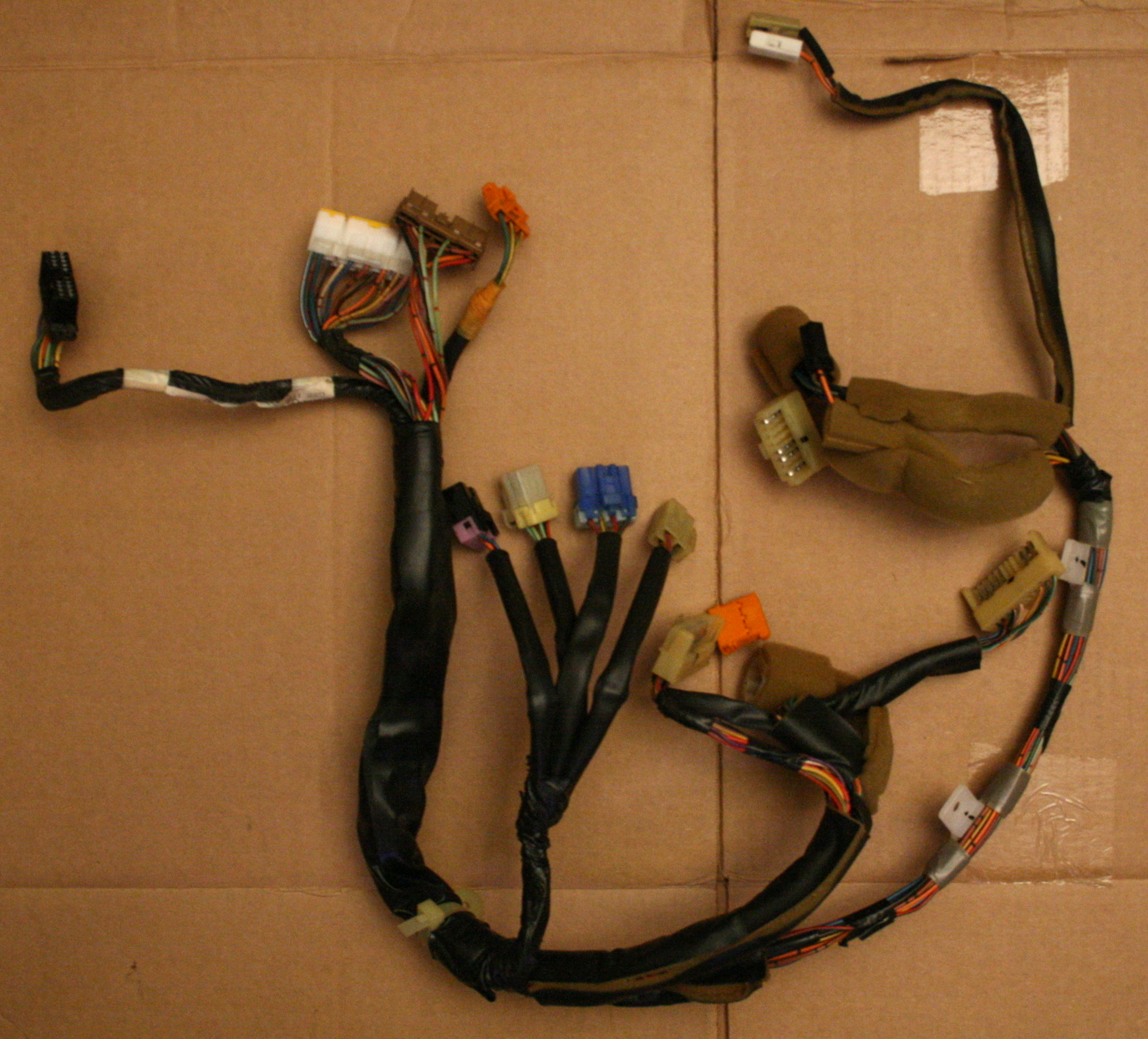
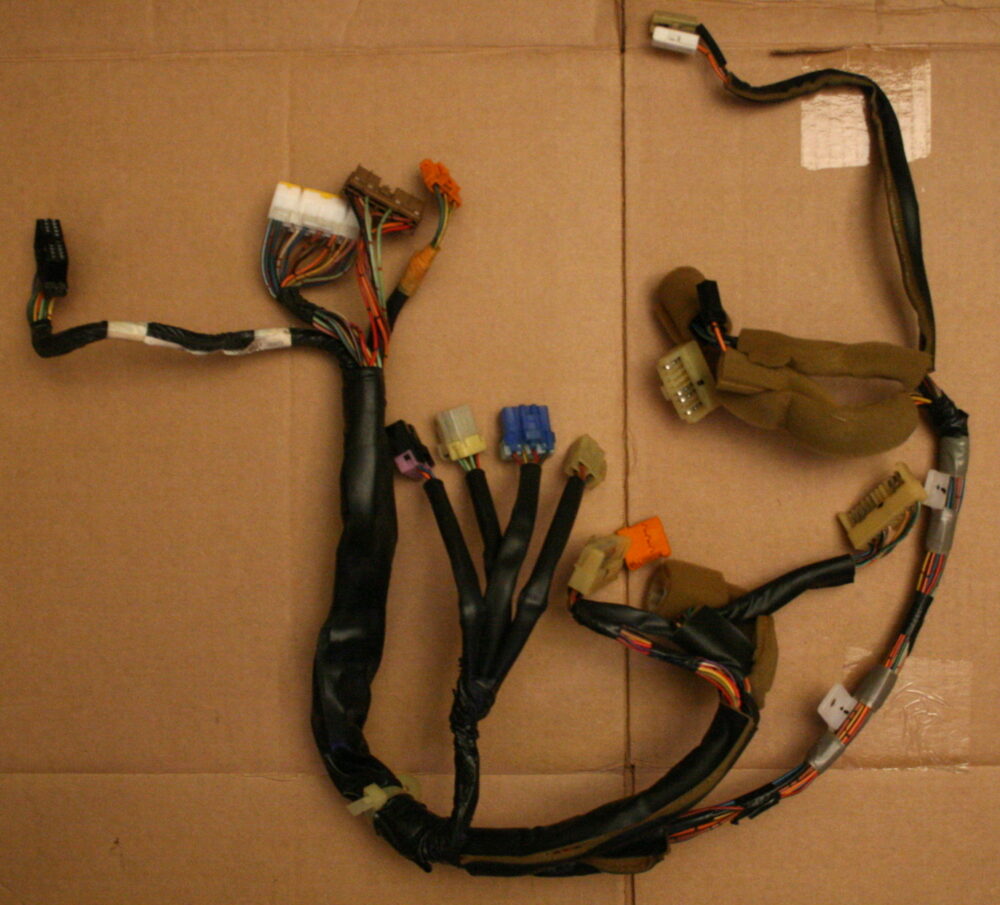
Instrument-cluster wiring harness from a 1990 Geo Storm GSi, shown as a neutral example of harness branches and connector types rather than a Caterpillar part. Photo by Ildar Sagdejev (Specious), CC BY-SA 4.0, via Wikimedia Commons.
Distinguish OEM vs “compatible” labelling
Language on product pages matters:
- OEM channels (Cat dealers, some heavy-truck dealers) will typically state that the part is genuine and explicitly carry Caterpillar branding. The Cat Parts harness category is an example of clearly OEM-labelled products.
- Aftermarket harness manufacturers usually say “for Caterpillar excavator,” “replacement for Cat 267-9592,” or similar, and focus on compatibility, not OEM branding, as seen in the Guangzhou manufacturer’s listing on Alibaba.
- Retail marketplaces like Amazon AU use phrases like “compatible with Caterpillar” and may suggest easy installation or match to the “original machine,” but avoid the legal implications of calling the part genuine OEM.
Your purchasing process should treat “compatible” harnesses as aftermarket, regardless of how close they claim to match OEM fit.
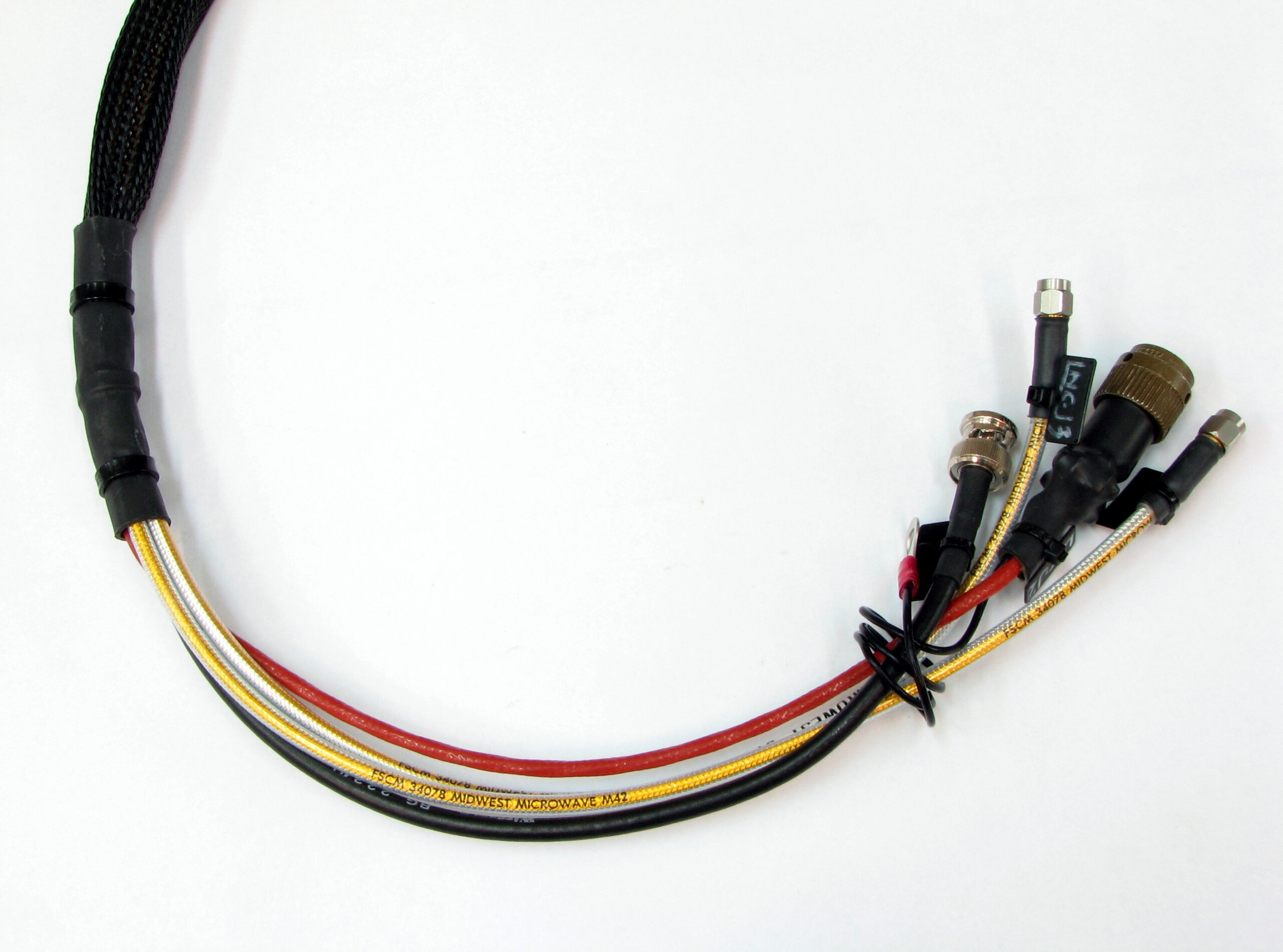
A coaxial cable harness illustrating bundled routing and multiple connector ends; it is not presented as a Caterpillar part. Photo by Adamantios, CC BY-SA 3.0, via Wikimedia Commons.
Manufacturer and seller credentials
For cross-border wholesale orders, look beyond generic star ratings:
- On B2B marketplaces: prefer suppliers whose main catalog is heavy equipment harnesses or electrical looms. The Guangzhou harness manufacturer on Alibaba positions itself specifically as an excavator harness producer, which is stronger than a general-purpose trader selling a few harness SKUs.
- Ask for photos of actual production (cutting, crimping, loom wrapping) and quality-control steps (continuity testing, insulation resistance). You’re looking for evidence that harnesses are built as a core business.
- On retail marketplaces: for experimental, low-volume buys, review how often the seller deals in heavy equipment parts. A seller selling one Cat-compatible harness and mostly unrelated consumer items suggests a trading model rather than technical specialization.
Inline risk callout: don’t skip samples
For anything beyond a single-machine repair, avoid placing a large cross-border order without a sample harness:
- Order 1-2 units and test on your own equipment or through a trusted workshop in Australia.
- Check connector fit, harness routing, strain relief, and any heat or abrasion points during actual machine operation.
- Only scale up once the sample passes both fitment and short-term operational checks.
OEM harnesses from Cat dealers are designed to fit by part number, but even then, complicated retrofits or modified machines may benefit from dealer consultation before large purchases.
MOQ, Pricing, and Channel Choice for Cross-Border Orders
The right sourcing channel depends on your order size, your need for OEM certainty, and how much complexity you’re willing to handle on imports into Australia.
Here is a compact comparison to frame those trade-offs:
| Channel type | Typical order size | MOQ/pricing pattern (editorial) | Fitment confidence | Best suited use case |
|---|---|---|---|---|
| Cat dealers / Cat Parts Store | 1-10 harnesses per order | No formal MOQ; per-unit pricing, sometimes fleet discounts via dealer | Highest, backed by OEM diagrams and part numbers | Critical machines, warranty-sensitive work, fleets needing OEM-only parts |
| Specialist Chinese harness manufacturers (e.g., Alibaba) | 10-100+ harnesses | MOQs set per model; per-unit prices lower for bulk, negotiated | Medium if you validate part numbers and test samples | Resale or internal use where aftermarket is acceptable and you want lower cost |
| Retail marketplaces (Amazon AU, similar) | 1-5 harnesses | Sold per piece; often higher unit price than bulk imports | Variable; relies on seller accuracy and your verification | One-off repairs, trials of aftermarket brands, urgent replacements |
Those patterns are editorial generalizations based on how these channels operate; specific prices and MOQs are negotiated case by case.
How DHgate fits into this picture
DHgate is a general global marketplace that leans heavily on Chinese suppliers for a wide range of industrial and vehicle-related parts. Around 2026-10-05, a search snapshot shows an aftermarket engine tachometer described as “Accessories For CAT Caterpillar Electronic 1977348” listed on DHgate (CAT-labelled tachometer example). That’s one example that DHgate can surface Caterpillar-related components alongside broader industrial hardware.
For wiring harness strategies, DHgate’s practical role for an Australian buyer is usually:
- Supporting components or related electronics (gauges, connectors, brackets) rather than mission-critical main harnesses.
- Low-volume, experimental buys to test a supplier’s capabilities before discussing any custom harness work offline.
Because DHgate is a multi-category marketplace, you should treat every listing as seller-specific. Verify claims about CAT compatibility with the same scrutiny you’d apply elsewhere: detailed part numbers, connector photos, and, ideally, a small test order before depending on the part in a fleet maintenance program. If you decide to explore this route, articles such as Find wholesale suppliers on DHgate and Find DHgate suppliers can help you structure that marketplace vetting.
Cross-border details for Australia
Whether you buy OEM or aftermarket, work through the full landed-cost picture:
- Factor freight from the source country to Australia, plus domestic distribution to your workshop or customers.
- Consider customs classification: wiring harnesses and electrical cables usually sit under specific HS codes, and you’ll need accurate descriptions for clearance.
- For bulk harness imports from Chinese manufacturers, negotiate packaging and labelling so each harness is clearly tagged with the part number and machine application. That makes reselling or internal stock management easier.
If you expect ongoing harness demand (e.g., supporting a particular series of Cat engines or excavators), locking in a relationship with either a local Cat dealer for OEM or a single proven aftermarket manufacturer can reduce both fitment risk and admin overhead over time.
Short buyer scenarios
To tie this together, here are two common scenarios:
- Small Australian reseller testing aftermarket Cat-compatible harnesses
You identify steady demand for a specific engine harness. You buy one compatible harness via Amazon AU to validate fitment on a customer machine. Once it passes, you approach a specialist harness manufacturer on Alibaba with the confirmed part number and your photos, negotiate a small bulk order, and use samples before scaling.
- Fleet operator needing guaranteed OEM for critical machines
Your mining fleet runs high-value Caterpillar equipment under warranty and extended service contracts. You source directly through the Cat Parts Store and local dealer, using part-number lookups and OEM diagrams. Any harness failure risk is unacceptable, so you treat aftermarket and marketplace listings only as last-resort backup or for non-critical ancillary components.
Each path is valid; the right choice depends on how much risk you can carry and how central the harness is to your machines’ uptime and safety.