
Replacing Ford F-150 seats usually means one of two things: either you’re swapping complete seat assemblies from another truck (often used OEM take-offs), or you’re refreshing what you already have with new foam, covers, and hardware. For a 2002 F-150 or a late-model truck, you’ll rarely buy brand-new factory seats in a box; instead, you’ll hunt salvage yards, owner forums, general marketplaces, or specialty upholstery companies for compatible originals or quality aftermarket kits.
For most buyers, the decision is simple: if you want an exact trim match and factory look, you chase OEM-style seats or covers; if you mainly care about comfort or price, you repair or upgrade your existing seats with aftermarket components.
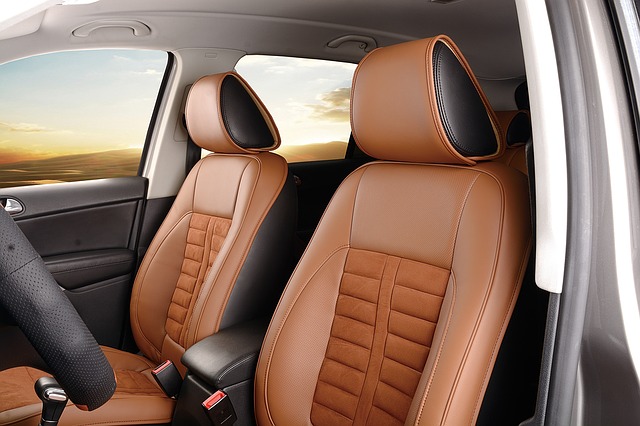
Automobile front seats. Photo by Gmail56789, CC BY-SA 4.0, via Wikimedia Commons.
What counts as Ford F-150 seat replacements and parts?
“Seat replacements and parts” covers a spectrum from a full interior swap to a small hardware fix:
- Complete seat assemblies – driver and passenger front buckets, 40/20/40 benches, rear bench or split-folding seats. These include frames, foam, upholstery, and often built-in airbags and power mechanisms.
- Upholstery components – replacement leather or cloth covers, foam cushions, and trim pieces. Many owners with newer trucks (like a 2021 King Ranch) look specifically for covers that match the OEM pattern when the “pleather” starts peeling.
- Seat hardware and accessories – tracks, brackets, seat belt buckles, front consoles, and armrests. OEM-oriented parts sites for Ford list interior components such as front consoles and sometimes related hardware.
Typical scenarios:
- A high-mileage early-2000s F-150 with a ripped cloth bench where the owner wants any clean, comfortable seat that bolts in safely.
- A newer F-150 with worn or peeling leather where the owner wants OEM-style replacement covers to preserve resale and match the trim.
- An upgrade project: taking cloth, manual seats in a 2017 crew cab and swapping to leather, power seats from a higher trim.
Each use case pushes you toward different products: complete seats if your frame or foam is shot, covers and foam if the structure is fine but the surface is ugly, and smaller parts if only something like the console or buckle has failed.
OEM take-offs vs aftermarket: types of seats and compatible swaps
Most F-150 seat options fall into a few practical buckets.
1. OEM assemblies and salvage-yard take-offs
Brand-new factory seat assemblies for older trucks are rare; what you usually see marketed as “OEM seats” are:
- Take-offs from parted-out trucks – pulled from a donor F-150 at a salvage yard or from a dismantler listing seats online.
- Used OEM seats on general marketplaces – listings on sites like eBay that advertise front seats for Ford trucks as “genuine” or “OEM” assemblies. For example, eBay’s category pages list seats marketed as OEM for F-150 Heritage models, such as “Genuine OEM Front Seats for Ford F-150 Heritage” on its Ford truck seats section. Condition and originality vary, so you need to inspect photos and descriptions closely.
Owners of early-2000s trucks often rely on this route. Discussions on Ford F-150 forums show people with 2002-2003 SuperCab trucks asking which years and trims share compatible seat mounting patterns, then being advised to look at nearby model years in junkyards or online. A thread on FordF150.net about compatible seats for a 2003 SuperCab illustrates how owners use forums to narrow down donors and debate which years are likely to bolt in.
Compatibility basics (editorial judgment based on typical generation changes):
- Seats tend to interchange more easily within the same generation (e.g., 1997-2003, 2004-2008, 2009-2014, 2015-2020) than across big redesigns.
- Cab style matters: Regular Cab, SuperCab (extended), and SuperCrew often have different rear seat setups and sometimes different front seat tracks.
- Newer seats with integrated side airbags and advanced sensors may require wiring changes or may not be safe or legal swaps into much older trucks.
You should treat forum compatibility posts as starting points, not rules. Always confirm mounting points and wiring with your own truck and, where needed, a professional.
2. Aftermarket replacement seats and retrofit kits
If exact OEM look isn’t critical, a lot of owners consider aftermarket seats from general parts suppliers or truck-specific brands.
- These range from basic bucket seats to bolstered “racing” styles marketed for pickups.
- Some kits include adapter brackets claimed to fit specific F-150 generations and cab styles.
Forum conversations mention catalog sellers with seats for most trucks when OEM isn’t a priority. The upside is new foam and upholstery; the downside is that fit and comfort are less predictable, and visual match to the rest of your interior may be off.
Aftermarket is usually best for:
- Work trucks where durability and stain-resistant materials matter more than factory appearance.
- Custom builds, where you’re willing to modify brackets or accept a more generic interior look.
3. OEM-style upholstery, covers, and foam
A big segment of the market is seat refresh, not full seat replacement:
- Owners of newer F-150s often search social groups for replacement seat covers that match their OEM trim. One Facebook group example shows an owner asking where to get a cover that matches their existing F-150 seat; replies point them toward auto parts and upholstery suppliers that focus on truck interiors.
- On truck forums, people describe buying “original Ford” leather seat cover kits on general marketplaces for late-model F-150s, aiming to restore the OEM look without swapping the entire seat. An extended thread on F150Forum.com about “ebay original Ford ebony leather seats” illustrates that many buyers are specifically chasing OEM-style upholstery kits instead of complete seats.
- Specialty upholstery companies post videos showing step-by-step removal and repair of worn F-150 seats, including early-2000s Lariat crew cabs. In one example, The Seat Shop demonstrates that unbolting seats, stripping old covers, and installing new upholstery and foam can be done by many owners with basic tools.
This path keeps your factory seat frame, power mechanisms, and sensors in place, while renewing what you touch and see. For trucks where the structure is solid but the fabric is destroyed, it’s usually the most rational spend.
4. Seat covers and protective layers
Finally, slip-on seat covers are the lowest-commitment option:
- Sold through auto parts stores and online retailers, sometimes in F-150-specific designs.
- Good for protecting still-decent seats or hiding moderate wear.
They won’t fix collapsed foam or broken frames, and they rarely match OEM leather exactly, but they’re fast and cheap—popular for fleet and work trucks.
Quick comparison: choosing the right seat option
| Option type | Best for buyer who cares most about… | Key advantages | Main trade-offs |
|---|---|---|---|
| Used OEM seat assemblies | Factory-correct look and bolt-in fit | Matches original trim; likely to fit within same generation | Used condition and wear; heavy to ship |
| Aftermarket seat assemblies | Fresh materials and custom style | New foam and upholstery; more design flexibility | May require adapter brackets or modifications; may not match interior visually |
| OEM-style covers & foam | Keeping existing seat structure and safety systems | Retains factory frame, airbags, and sensors; restores OEM appearance | Labor to install; result depends on kit and installer quality |
| Universal or F-150-specific slip-on covers | Fast protection or cosmetic cover-up | Cheap, widely available, simple to install | Only hides wear; doesn’t repair foam or frame; limited trim matching |
Where to buy Ford F-150 seat replacements and parts
You won’t find a single perfect channel for every F-150 seat project. Different pieces tend to live in different parts of the market.
Salvage yards and local dismantlers
For full OEM seats on older trucks, local junkyards and dismantlers are often your first stop:
- They part out crashed or non-running F-150s and sell seats as assemblies.
- You can inspect frames, tracks, and upholstery in person and check mounting points against your truck.
Calling ahead with your model year, cab style, and trim helps them check inventory. If you’re sourcing for resale or small-scale ecommerce, building a relationship with one or two yards gives you a steady supply of cores you can clean up and resell.
Owner forums and model-specific communities
Ford-focused forums are a practical tool both for fit research and for sourcing:
- Threads on sites like FordF150.net show owners asking about compatible seats for a given year and cab, then getting pointers to specific ranges (e.g., nearby model years in the same generation) and aftermarket sellers when OEM is scarce.
- Classified sections in these communities often list take-off seats and trim pieces from members upgrading their interiors.
Use these discussions to narrow your search to realistic donor trucks and to learn from people who’ve already attempted the swap you’re considering.
General online marketplaces and classifieds
Large consumer marketplaces and classifieds platforms carry a mix of used and new seat components:
- You’ll see front seat assemblies, rear benches, and separate seat cover kits marketed for various F-150 years.
- Many listings describe seats or covers as “OEM” or “original Ford,” especially for leather upholstery kits.
Treat “OEM” language as a claim, not a guarantee. For each listing, focus on:
- Clear photos of tags, stitching, and wear.
- Exact year range, cab style, and trim the seller says it fits.
- Any mention of side airbags, occupancy sensors, or power adjustments.
For business buyers refurbishing seats for resale, having your own inspection checklist and rejecting marginal cores is key, since online marketplaces don’t standardize condition.
Specialty upholstery and seat shops
Dedicated seat-upholstery companies and truck interior specialists are strong options for cover and foam replacement:
- They often design kits specifically for F-150 generations and popular trims.
- Public posts and videos show them removing and repairing F-150 seats step by step, which gives you a realistic view of DIY difficulty.
These shops tend to offer:
- Trim-matched replacement covers (often advertised as OEM-style).
- Foam cushions shaped for common driver-seat wear zones.
- Phone or chat support to verify you’re choosing the right kit for your year and configuration.
This is a sweet spot for owners who care about keeping factory safety systems intact while fixing comfort and appearance.
OEM-oriented parts sites and dealers
If you need hardware or interior trim rather than entire seats, OEM-focused parts sites are useful:
- Ford-branded parts portals and dealer sites let you drill down by VIN or model year to interior diagrams.
- They list pieces like front consoles, small trim panels, and sometimes basic seat hardware. For example, a 2002 F-150 Lariat front console assembly appears on Ford’s OEM parts catalog at ford.oempartsonline.com, showing how these sites organize interior components.
These sites aren’t usually where you’ll find complete seat assemblies for older trucks, but they’re reliable for the smaller components that generic marketplaces may mislabel.
Social groups and local upholstery shops
Social media groups for F-150 owners are often used as recommendation boards for seat cover sources:
- Owners ask where they can get replacement covers that match a specific trim, then get pointed toward auto parts chains or upholstery suppliers.
Pair those suggestions with local upholstery shops that can:
- Install covers and foam correctly.
- Diagnose whether your seat frame or airbags have hidden damage.
For safety-critical trucks (daily drivers, tow rigs), having at least one professional inspect the seat after major work is a sensible step.
If you’re deciding between full seat replacements and parts for a Ford F-150, start by being honest about what’s actually wrong: structure, comfort, or appearance. Once you know whether you need frames, foam, or just covers, the right mix of salvage yards, forums, marketplaces, and upholstery specialists becomes clearer—and you can avoid chasing expensive “OEM” seats when a targeted repair would do the job just as well.