
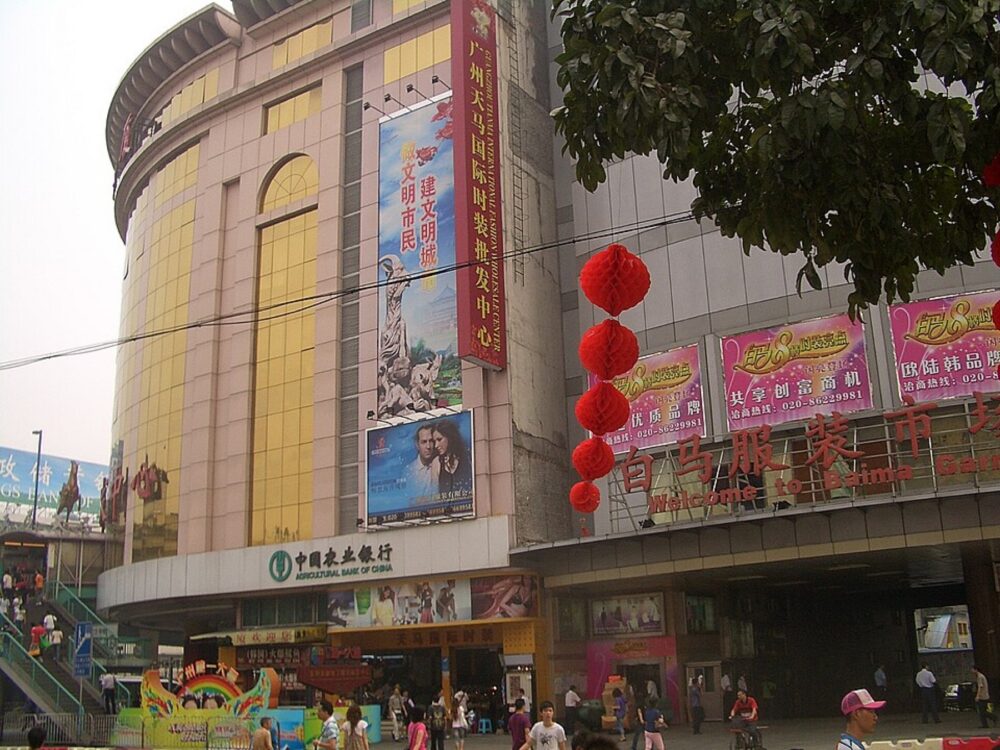
You can buy Guangzhou-area wholesale clothing online without setting foot in the city, but the best route depends on your order size, customization needs, and how much control you want over suppliers. Large B2B platforms like Alibaba and Made-in-China give broad access to factories; 1688 needs an agent but can reach deeply into Guangzhou wholesale networks; small-wholesale marketplaces like DHgate and AliExpress are often easier for small US buyers to test Guangzhou-style products in modest quantities.
For a US-based small business, that usually means choosing between: 1) big, factory-focused platforms for serious volume and custom production, 2) agent-mediated access to China-only sites like 1688 for lower pricing and more local brands, 3) small-wholesale marketplaces (DHgate, AliExpress) for low-commitment trials, and 4) full-service sourcing agents who work the Guangzhou markets on your behalf.
Online Routes to Guangzhou Wholesale Clothing: What’s Actually Available
You won’t find a single “Guangzhou Clothing Market official site” where you click and buy from every stall. Instead, you reach Guangzhou clothing suppliers through broader China platforms and services:
- Global B2B marketplaces. Editorial lists of China wholesale platforms consistently include Alibaba, 1688, Made-in-China, and Global Sources as major options for sourcing goods from China, clothes included. See, for example, the overview on ECB’s China B2B platforms comparison.
- China-domestic marketplaces accessed via agents. Sites like 1688 are focused on the China market, but many Guangzhou clothing factories and wholesalers list there. Foreign buyers typically work through a sourcing or inspection agent who orders and consolidates shipments.
- Regional specialist sites and agents. Some sourcing companies explicitly offer “Guangzhou market” runs: they go into the clothing districts, find items or factories, and then manage the export.
So your real decision isn’t “is there a Guangzhou clothing website?” It’s which mix of global marketplace, China-domestic platform plus agent, and small-wholesale site is the right fit for your business stage.
How Major Platforms Handle Guangzhou Clothing Sourcing
Different platform types connect you to Guangzhou clothing in very different ways.
Big B2B platforms (Alibaba, Made-in-China, Global Sources)
On global B2B platforms, Guangzhou clothing shows up as:
- Factory or trading-company listings for categories like women’s dresses, hoodies, sportswear, and fashion accessories.
- Minimum order quantities (MOQs) that can be relatively high (often dozens or hundreds of pieces per style) and geared toward bulk orders.
- A stronger focus on OEM/ODM — you’re expected to bring a design, branding, and maybe fabric specs.
You usually negotiate directly with suppliers, discuss lead times and packaging, and move toward purchase orders and repeat production. This is best suited to ecommerce brands ready to commit.
China-domestic marketplace via agent (1688)
1688 is frequently cited in platform lists as a major Chinese B2B site, but it’s built for domestic buyers. Many Guangzhou clothing wholesalers list current fashion, basics, and factory overruns there.
Foreign buyers typically:
- Search 1688 for styles and suppliers (often using image or Chinese-language keyword search).
- Share links with a sourcing agent, who checks suppliers, orders samples, and arranges local payments and logistics.
- Consolidate goods into export-ready shipments.
This route can be cost-efficient and close to the real Guangzhou wholesale scene, but you’re adding an intermediary and some upfront research work.
Small-wholesale marketplaces (DHgate, AliExpress)
DHgate’s editorial content describes the site as a large marketplace for clothing and other inexpensive products that connects international buyers with wholesale manufacturers, suppliers, and distributors in China, and more broadly as an online trading platform for clothing buyers and sellers.
On small-wholesale marketplaces, you typically see:
- Ready-made clothing and fashion accessories, plus some OEM-style listings (for example, “custom clothing factory” services).
- Smaller minimums or per-piece pricing, so you can test styles in tens of units instead of hundreds.
- Supplier relationships that are simpler and more transactional: you’re often buying existing designs instead of developing new ones.
Sourcing agents and hybrid workflows
Some importers combine platforms with boots-on-the-ground help:
- Use Alibaba or 1688 to shortlist Guangzhou-area factories.
- Hire an agent to visit the factory or market, verify quality, and manage production or spot-buying.
This is helpful if you’re serious about long-term supply but don’t want to travel yourself.
How These Routes Differ for Guangzhou Clothing
This table focuses on how each route typically works for Guangzhou clothing — not on protections, shipping promises, or prices.
| Route / platform type | Typical order size & MOQ | Supplier access style | Best suited to… |
|---|---|---|---|
| Global B2B (Alibaba, Made-in-China) | Medium to large bulk orders | Direct factory or trading-company negotiation | Brands scaling SKUs & custom designs |
| China-domestic via agent (1688) | Small to medium, often flexible | Agent intermediates with local wholesalers/factories | Price-focused buyers, China-savvy teams |
| Small-wholesale marketplaces (DHgate, AliExpress) | Small wholesale & test orders | Marketplace listings, some OEM-style services | Testing products, micro brands, low budget |
| Sourcing agent + market/factory visits | Any, depending on your brief | Custom supplier search in Guangzhou markets | Buyers wanting hands-on local expertise |
DHgate Listing Snapshot: Guangzhou-Related Fashion Examples (2026-10-04)
To ground the idea of using a small-wholesale marketplace for Guangzhou sourcing, here are a few DHgate listings observed on 2026-10-04. Listings, prices, and availability can change; these are examples, not endorsements.
- High-end women’s clothing from Guangzhou – A listing titled “High-end Women’s Clothing Designer Polo Shirt Hoodie Guangzhou: European-style Short-sleeve Designer Shirt Knit Tops With Shawls New Spring/summer Collection” in the Women’s Blouses & Shirts category, priced roughly in the USD 67.06-80.58 range. Supplier: `wanqiang002`. (View listing)
- Guangzhou OEM high-end women’s bags – A tote-category listing offering “Guangzhou OEM High-end Women’s Bags,” suggesting OEM-style bag production, with prices around USD 32.45-33.98. Supplier: `monya01`. (View listing)
- Custom women’s clothing factory/OEM dress service – An apparel design service listing titled “Custom Women Clothing Factory High Quality Dress Manufacturer Apparel Design Service OEM Supplier China” in a home clothing category, with prices around USD 46.23-47.42 per item. Supplier: `partslist`. (View listing)
These examples show how a small-wholesale marketplace can expose both ready-made Guangzhou-area fashion items and OEM-style services that you might otherwise pursue via a factory-focused platform.
Which Platform Route Fits Your Business (and Where DHgate Belongs)
Because each route has a different feel, it helps to match platforms to concrete buyer scenarios.
Scenario 1: Amazon or Shopify seller testing 3-5 new SKUs
You want to:
- Try a few Guangzhou-inspired fashion items with minimal upfront risk.
- Order in low quantities first, then scale the winners.
Practical routes:
- Alibaba “ready-to-ship” listings. If you find Guangzhou traders offering low MOQs, this can also work, but you’ll spend more time negotiating.
Where DHgate fits: It can serve as a testbed for styles, small OEM trials (as those custom clothing factory listings suggest), and niche products before you commit to larger MOQs or factory programs. You trade off some depth of factory detail for speed and marketplace convenience.
Scenario 2: Boutique brand developing custom apparel
You want:
- Branded or original-design pieces produced consistently.
- Direct control over fabric, fit, and labeling.
Practical routes:
- Alibaba / Made-in-China / Global Sources. These platforms are a common starting point for finding Guangzhou-area apparel factories that can handle OEM/ODM and repeated production.
- 1688 via agent. If you or your agent can navigate Chinese-language listings, you may find more local factories and aggressive pricing.
Where DHgate fits: DHgate’s OEM-style clothing and bag listings can help you experiment with a small run of a custom design or test a factory’s work. Once you’re confident, many brands move core production to a factory-focused platform or direct relationship where they can negotiate long-term terms.
Scenario 3: Budget-conscious dropshipper or micro retailer
You want:
- Very low upfront investment.
- Fast access to trendy styles.
Practical routes:
- Small-wholesale marketplaces. Sourcing editorials such as EJET’s overview of Chinese wholesale sites often highlight DHgate and AliExpress as accessible options for small orders from China. You can build a narrow assortment of Guangzhou-style fashion without committing to full factory MOQs.
- Agent-curated 1688 sourcing. If you’re willing to work with an agent, you may get lower per-unit prices, but the workflow is more complex.
Where DHgate fits: As a marketplace oriented toward small wholesale buyers, DHgate can be a workable middle step between pure retail imports and full wholesale sourcing. It’s useful for validating demand for certain Guangzhou looks or categories.
Scenario 4: Established importer scaling a clothing line
You want:
- Reliable, repeat production from Guangzhou factories.
- Control over quality systems, packaging, and compliance.
Practical routes:
- Alibaba / Made-in-China / Global Sources plus local agent. Use these platforms to identify factories, then deploy local QA and logistics support.
- Direct 1688 plus agent and factory visits in Guangzhou. Deep, cost-focused sourcing where you or your agent work directly with the market and factory cluster.
Where DHgate fits: At this stage, DHgate is usually a secondary tool — useful for spotting niche designs, monitoring price levels on certain categories, or testing micro-collections, while main production runs go through direct factory channels.
Turning Your Platform Choice into a Concrete Workflow
Once you pick a route, plan your next steps around how that platform actually works:
- If you lean toward DHgate or another small-wholesale marketplace: start with 2-4 suppliers and very focused product categories (for example, women’s tops or OEM bags). Use listing data — titles, categories, price ranges, and any OEM mentions — to shortlist candidates. For more context on the marketplace itself, see what DHgate is and how the marketplace works.
- If you choose Alibaba or similar: map out your MOQ targets and customization needs, then filter for Guangzhou or Guangdong suppliers matching those constraints. Expect more negotiation and documentation.
- If you decide on 1688 via an agent: invest time in clarifying your spec and target budget; your agent will need precise direction to navigate Guangzhou’s huge clothing universe.
For many US small ecommerce businesses, a hybrid approach works well: use small-wholesale platforms like DHgate to cheaply test Guangzhou styles, then graduate successful products to a deeper factory relationship on a B2B platform or through a local agent.
If you want a wider perspective on how DHgate compares with AliExpress, Alibaba, and Temu beyond Guangzhou clothing specifically, see compare DHgate with AliExpress, Alibaba and Temu. For a broader overview of marketplace types, you can read compare online marketplaces and shopping platforms.