
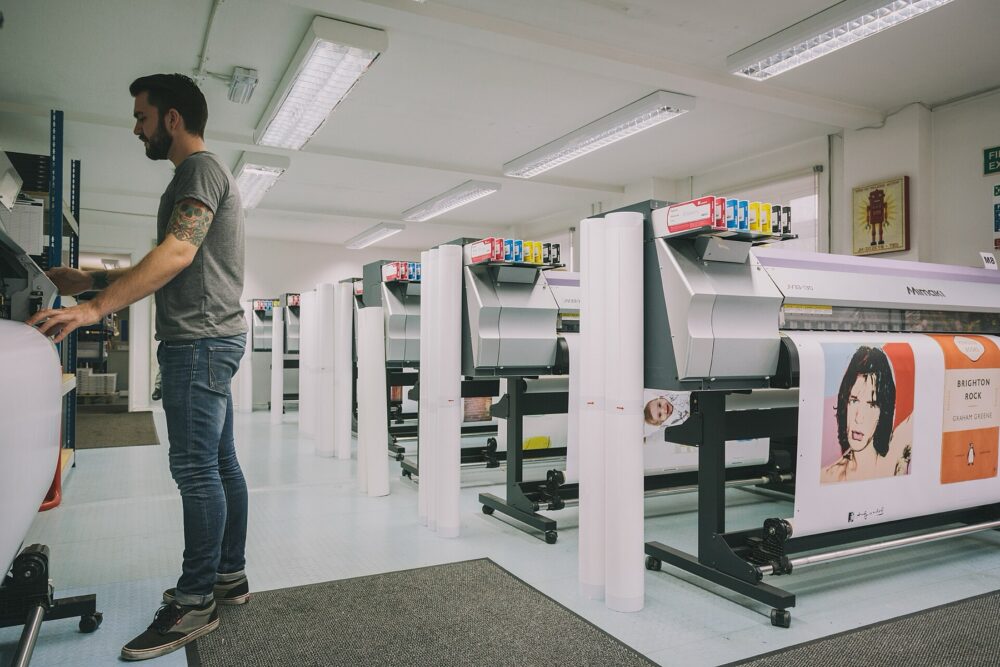
Amazon Merch on Demand pays you royalties and covers production, shipping, and customer support. You upload designs, set prices within Amazon’s rules, and earn a fixed royalty per sale while Amazon keeps the rest as its fee for running the operation. Third‑party POD suppliers like Printful and Printify flip that model: you pay them a per‑item fulfillment fee plus shipping, then you keep whatever margin is left between that cost and your sale price. For most T‑shirt sellers, that trade‑off is lower hassle and lower margins on Merch versus higher potential margins but higher responsibility and cash outlay with Printful/Printify.
Independent guides such as Printify’s Merch overview report that creators typically see around USD $3–$6 in royalties per standard T‑shirt sale on Amazon Merch, depending on the shirt price and product type. By contrast, Printful’s own comparison example shows a base fulfillment fee of about $9.25 plus roughly $2.20 shipping for a T‑shirt in their US scenario, leaving you to decide your retail price and margin over that combined cost.
How Amazon Merch on Demand, Printful, and Printify actually charge you
Amazon Merch on Demand uses a pure royalty model. According to Amazon’s royalty explainer, Amazon sets base costs and handles printing, shipping (including Prime-eligible delivery in many cases), and customer support, then pays you a net royalty per item sold.Amazon royalty resource. You don’t pay upfront for inventory or fulfillment; your “fee” is simply the portion of the sale price Amazon keeps.
Printful is a fulfillment provider. You connect it to a store (Amazon, Shopify, Etsy, etc.), set your own retail prices, and each time you sell a product, Printful charges you the production cost (their base fee) plus shipping. The markup between that cost and your retail price is your profit. Their blog’s Merch vs Printful example uses a T‑shirt with a $9.25 base cost and $2.20 shipping to illustrate how that math might look.Printful comparison.
Printify runs a similar model but acts as an aggregator of multiple print providers. You choose a print partner and product in Printify, see the base price, and then list the product in your store. Each sale triggers a fulfillment charge from Printify/the printer; you keep the margin above that cost.
In short:
- On Merch, Amazon owns the storefront and operations; you get a slice of each sale.
- With Printful/Printify, you own the storefront and pricing; they’re your behind‑the‑scenes printer and shipper.
Royalties, margins, and payout timelines: Amazon Merch vs Printful vs Printify
To make this concrete, here’s a simplified comparison for a standard T‑shirt sold into the US market. These are illustrative ranges, not guarantees.
| Platform | Typical earnings model | Approx. per-shirt earnings (T‑shirt examples) | Payout rhythm (typical) | Cash‑flow feel |
|---|---|---|---|---|
| Amazon Merch on Demand | Fixed royalty per sale, Amazon keeps remainder | Third‑party guides suggest roughly $3–$6 royalty per shirt when priced in a common range | Batched royalties (often monthly after sales/returns settle) | Slower, but no upfront costs |
| Printful | You set price; pay base fee + shipping per order | Example: ~$9.25 base + ~$2.20 shipping; your margin depends on sale price above ~$11.45 cost | Depends on your store (e.g., Amazon/Shopify/Etsy payout cycles) | Faster once store payouts start; you fund fulfillment as you go |
| Printify | You set price; pay print provider’s base fee per order | Similar structure to Printful, with base cost varying by provider and product | Also depends on your store’s payment processor | Similar to Printful; more control, more responsibility |
Margin math examples
These rough numbers help you see the trade‑offs for a US‑priced shirt:
- Amazon Merch: If a shirt sells for $19.99, independent analyses suggest your royalty might land in the mid single‑digit dollars. That can be attractive if you don’t want to manage print partners, but it caps your per‑item upside.
- Printful: Using their example costs (~$11.45 total), selling at $24.99 might leave you around $13.50 gross margin before store fees and ads. You shoulder risks like returns, ad spend, and misprints but have far more room to price up.
- Printify: If your chosen provider charges, say, $8.50 base and you pay $4 in shipping on average, a $24.99 sale leaves about $12.50 before platform fees and marketing, very similar dynamics to Printful.
Slot limits and catalog freedom
Independent analysts like PodVector’s comparison point out that Amazon Merch uses tiers and design slots that limit how many products you can list until you prove sales performance. That tier system can cap your short‑term income potential even if your designs are strong, simply because you have fewer live listings than you might on an open POD catalog.
Printful and Printify don’t impose that kind of slot cap. If you can handle the workload and the cost of failed experiments, you can push as many variations live as your store and audience can bear.
Which POD setup fits different sellers (and when to add other channels like DHgate)
Because the money mechanics differ so much, your best setup depends on who you are and how you sell.
1. Audience‑first creators (streamers, artists, musicians)
2. Ecommerce operators and brand builders If you’re already running a Shopify, Amazon Seller, or Etsy store, Printful or Printify usually make more sense as core infrastructure. The per‑item fulfillment fees are higher, but you keep control of pricing, bundling, discounts, and cross‑selling. That margin control matters once you start paying for traffic via ads or influencers and need to hit a target contribution margin.
3. Data‑driven designers testing concepts One viable play is to use Merch for idea validation—launch designs, watch which ones win organic Amazon traffic despite lower royalties, and then spin the winners into a higher‑margin Printful/Printify catalog in your own store. You can even run both channels simultaneously for the same artwork: Merch for reach, your own store for deeper brand experiences.
As your catalog matures, you might decide to shift some best‑selling designs into bulk production to improve per‑unit economics further. That’s where wholesale marketplaces come in. For example, DHgate hosts cross‑border apparel and custom print products via wholesale listings, including blank and printed T‑shirts. If you reach that stage, treat marketplaces like DHgate as a sourcing layer: request samples, compare a few suppliers, and run the numbers against your current POD costs before committing to volume. You’ll find neutral background on how DHgate itself works in this overview and broader context in our comparison with AliExpress, Alibaba and Temu.
For an Australia‑based seller targeting US buyers, the relative picture doesn’t change much—Amazon Merch, Printful, and Printify all largely quote and pay in USD for US‑bound orders. The real decision is whether you value Amazon’s built‑in reach and simpler cash flow (lower but very straightforward royalties) more than the pricing freedom and higher potential margins of running your own store with a POD backend. In many cases, the most resilient approach is a hybrid: Merch for low‑touch reach, Printful/Printify for brand‑controlled margins, and wholesale sourcing later once your top designs justify bulk.