
If you treat slouch socks as a cheap but shipping-heavy item, you’ll usually get the best prices by comparing total landed cost per pair (product + freight + import fees) across US wholesalers, B2B platforms, and cross‑border marketplaces, then ordering in the volume band where shipping is spread out but your inventory risk is still manageable. For many US small businesses, that sweet spot is a few dozen to a few hundred pairs, not full factory-level runs.
Below, we’ll look at realistic wholesale price ranges, what drives them, and how different buying channels stack up for slouch socks.
What Slouch Socks Really Cost in Wholesale and Retail
For basic socks supplied out of China, DHgate editorial context suggests typical wholesale prices often fall around $0.47–$1.8 per pair depending on quality and functionality. Slouch socks are usually in the regular to slightly upgraded range: thicker yarn, more fabric for the scrunch, and often fashion colors. That tends to push them toward the middle or upper end of that band, especially for heavy-weight or USA‑made versions.
US wholesale sites give useful real‑world examples. On sockswholesale.com, heavy American‑made slouch socks are sold in 6‑pair bulk packs. The per‑pack price (not quoted here because it changes) makes it clear you’re paying a premium over generic athletic socks — but the per‑pair retail equivalent is still well below trendy brand pricing found on fashion sites.
Retail brands often charge several times their sock wholesale cost. DHgate’s sock business editorial notes that small businesses commonly price around 2× wholesale, while larger brands may charge 4-8×. So if your landed cost on a slouch sock is about $1.20 per pair, budget retailers may sit near $2.50–$3, and branded fashion could push into the $6–$10+ zone.
As a small business, your real cost per pair includes:
- Product price: what you pay per pack or per pair.
- Shipping: in the US, often ground shipping from a wholesaler; cross‑border may be express air or postal.
- Import duties and fees: for cross‑border orders into the US; you can learn how these work in more detail in this customs and tariffs explainer.
- Payment fees: card or platform charges, small but relevant on thin margins.
For a practical mental model: basic slouch socks sourced well in bulk usually end up costing a US reseller somewhere in the low-to-mid single dollars per pair landed, then selling for a multiple of that depending on your brand and audience.
Example: how pack price turns into per-pair landed cost
Here’s a simple, evidence-grounded scenario using observed slouch packs:
| Scenario (not a quote) | Pack source and size | Pack price band (USD) | Implied product cost per pair | Notes on landed cost impact |
|---|---|---|---|---|
| Heavy US-made slouch socks | US wholesale site 6-pair pack (e.g., sockswholesale.com) | Pack price varies over time, typically higher than generic socks | Higher per-pair product cost than factory-direct | Shipping is domestic and simple; duties usually don’t apply, so freight plus fees are predictable. |
| Large cross-border slouch pack | Cross-border multi-seller listing: 36 pairs Fall Winter Slouch Knit Socks (snapshot 2026-09-29) | About $22.57–$25.72 per pack | Roughly $0.63–$0.71 per pair before freight and import costs | Very low product cost; total landed cost depends heavily on international shipping and any duties. |
| Small cross-border slouch pack | DHgate listing: Women Socks 3 Pairs Women’s Slouchy (snapshot 2026-09-29) | About $4.15–$4.88 per pack | Roughly $1.38–$1.63 per pair before freight and import costs | Higher per-pair price than the 36-pack, but easier to test demand and colors without large inventory. |
Those ranges show why slouch socks feel cheap at the factory gate but can end up in the low single digits landed once you add freight, duties, and platform or payment fees.
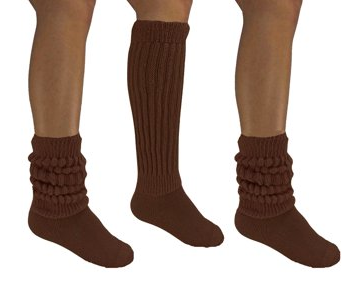
Slouch socks photographed by Mochica00, licensed CC BY-SA 4.0 via Wikimedia Commons; shown as a style reference, not a marketplace listing.
The Main Price Drivers for Slouch Socks
Several concrete factors push slouch sock pricing up or down. Understanding them lets you intentionally choose where to spend and where to save.
MOQ and pack size
Most wholesale slouch socks are sold in packs: 3‑pair fashion bundles, 6‑pair dance packs, or larger 24-36 pair cartons. Bigger packs usually mean a lower per‑pair product price. The tradeoff is cash tied up and the risk that colors or styles won’t sell.
For example, you’ll see US‑made bulk slouch socks sold in 6‑pair packs on sockswholesale.com, while cross‑border slouch listings on marketplaces often go up to 36 pairs per pack. You might pay more per pair for the 6‑pack, but you’re exposed to less unsold inventory.
Materials and construction
Most slouch socks are cotton‑rich blends (often around 80-85% cotton with synthetics for stretch). Heavier yarns, dense ribbing, and USA or EU production raise cost. Basic blended slouch socks align with the lower end of that $0.47–$1.8 wholesale band; thick, high‑end dance or workout slouch socks sit higher.
Customization and branding
Private‑label slouch socks with woven logos, custom colors, or special packaging cost more. You’re paying for design time, sampling, and smaller production runs. If you’re just testing demand, it’s usually cheaper to start with generic but good‑quality packs before jumping into custom.
Seasonality and trend cycles
Slouch socks spike around fall/winter and social‑media trends (think 80s/90s throwback looks). During peaks, both wholesale and shipping prices can harden; off‑season buying can lower them. If you stock fashion colors, be aware that trend changes can leave you with unsold inventory.
Shipping method and distance
Within the US, ground shipping for a carton of socks is relatively cheap per pair. Cross‑border air freight is more expensive but gets amortized across large volumes. That’s why small imports (say, 6-12 pairs) often have poor per‑pair economics, and pallet‑size imports look great on paper but carry big capital risk.
Quick sidebar: fashion colors vs unit cost
Slouch socks are highly visual. Buying 36‑pair packs in every pastel and neon might drop your unit cost nicely, but you’ve effectively locked cash into trend bets. Many small resellers do better starting with 2-4 core colors (white, black, one or two fashion tones) at slightly higher per‑pair cost, then expanding only once they see actual sell‑through.
Comparing Channels and Cutting Your Total Landed Cost
You’ve got three practical sourcing routes for slouch socks as a US buyer: local/US wholesale, US‑focused B2B platforms, and cross‑border marketplaces. Each has its own cost profile and risk level.
High-level channel comparison
| Channel | Typical pack sizes | Price profile per pair (editorial) | Key advantages for slouch socks | Main risks/cost tradeoffs |
|---|---|---|---|---|
| US wholesale websites | 6-24 pairs | Higher than factory; often mid single $ landed | Fast shipping, simpler returns, American‑made options | Limited ultra‑low‑cost options; higher unit cost. |
| US B2B platforms (e.g., Faire) | Multi‑pair store packs | Mid‑range wholesale | Access to many brands; sometimes net terms | Platform fees; you’re paying for brand and curation. |
| China cross‑border marketplaces | 3-36+ pairs | Often near factory-level product pricing | Very low product cost; broad style and color selection | Higher import complexity; longer lead times and more variables in landed cost. |
US‑based wholesale sites and distributors are straightforward: you can see slouch sock bulk packs (like the heavy 6‑pair bundle on sockswholesale.com), pay in dollars, and get quick delivery. Per‑pair cost is higher, but logistics are easy and you can often feel or sample the product first.
US‑focused B2B platforms such as Faire layer on selection and, sometimes, buyer‑friendly payment terms. You’re mostly accessing brands and small manufacturers, not factory‑direct pricing, but you reduce risk via smaller orders and curated suppliers.
Where cross-border marketplaces fit (including DHgate)
According to DHgate’s sock business editorial, a large share of global sock volume is produced in China, and many factories are reachable through China‑based marketplaces rather than their own standalone sites. That’s the appeal: you can get close to factory pricing on items like slouch socks, as long as you’re careful about seller comparison and order size.
On 2026-09-29, DHgate listings for slouch‑style socks illustrated typical cross‑border pack options:
- 36 pairs Fall Winter Slouch Knit Socks Slouchy Sock Scrunch Scrunchie Crew 250912 – a large slouch pack in the Socks & Hosiery category, around $22.57–$25.72 per pack from seller `huantong02`, with a 5.0 rating from one review. View listing.
- Casual Womens Socks MidCalf Slouch Cotton cycling socks sports 250912 – another slouch‑style listing around $22.6–$23.67 per pack from the same seller. View listing.
- Women Socks 3 Pairs Women’s Slouchy – Comfortable & Versatile Calf-Length Stockings – a smaller 3‑pair pack priced around $4.15–$4.88 per pack from seller `xingsha68`, with a 5.0 rating and a couple of reviews. View listing.
These snapshots show how cross‑border marketplaces can offer both large cartons with very low product cost per pair and small multi‑packs that make it easier to test demand.
When you evaluate any cross‑border option, focus on:
- The pack size and price range.
- Any import duties or taxes you’ll owe.
- Seller history, ratings, and clear photos/specs.
That way you’re comparing true landed cost per pair, not just attractive pack prices.
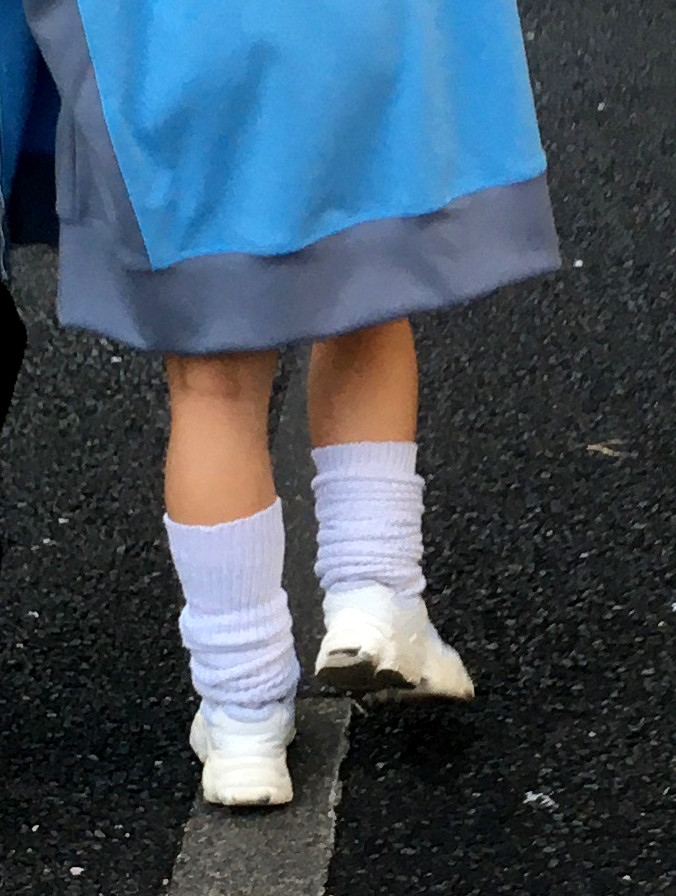
Loose-sock styling photographed by Nesnad, licensed CC BY 4.0 via Wikimedia Commons; shown to illustrate how fabric volume and drape affect the look.
Practical Ways to Reduce Landed Cost Without Hurting Quality
Slouch socks are a classic low‑ticket, high‑volume accessory. A few specific tactics make more difference than endlessly hunting for the absolute lowest sticker price.
Aim for the right MOQ band, not the absolute minimum or maximum
Very small orders (a few packs) keep risk low but push per‑pair cost up once shipping and fees are counted. Very large cartons drive unit cost down but can swamp a small business with inventory. For most US resellers, a few dozen to a few hundred pairs balances freight amortization with sell‑through risk.
Time your buys around seasons and promotions
Ordering fall/winter slouch socks slightly before peak season can mean better pricing and more available inventory. US wholesalers and platforms often run promotions that effectively trim a few percent off your landed cost; those matter when your margin per pair is small.
Negotiate or bundle where it actually helps
If you’re dealing with a factory or high‑volume seller, ask about price breaks at higher quantities or mixed‑style cartons (for example, 50% core colors, 50% fashion). The goal is to improve unit economics without over‑committing to any one trend color.
Standardize materials and specs early
Decide what “acceptable” slouch sock quality means for your store: weight, fiber blend, stretch, and length. Stick to those specs so you can compare suppliers apples‑to‑apples and keep returns down. You don’t need lab testing; just be consistent.
Work backward from your retail price and margin target
If you want to sell slouch socks at $6 per pair with roughly a 60-65% gross margin, your landed cost needs to sit closer to $2–$2.40. Use that as your sourcing filter: anything that can’t hit that number (after shipping and fees) either needs a higher retail price or isn’t a fit for your positioning.
If you start from those numbers, then pick the channel whose landed cost, lead time, and risk profile fit your business size, you’ll make much cleaner decisions about where to buy slouch socks wholesale — whether that’s a US bulk pack, a B2B platform brand, or a cross‑border factory listing.