
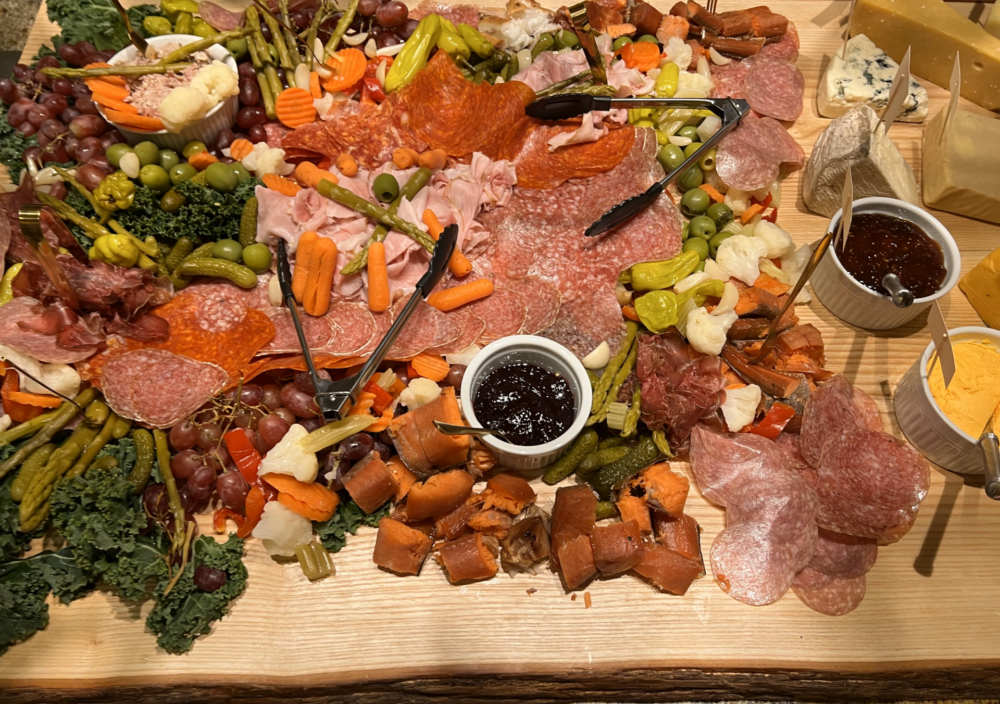
Quick answer: Buy mini cheese or charcuterie boards wholesale only after defining the exact food-contact use, dimensions, material, finish, quantity, packaging, and customization. Compare current written quotes on landed cost per accepted board, not the lowest search-result price. A domestic bundle, specialist wholesaler, custom maker, B2B marketplace, or DHgate seller can fit different orders, but each must pass the same evidence and sample checks.
This guide was reviewed on September 29, 2026. It does not claim a typical price, MOQ, delivery time, or best channel because those depend on the exact product, seller, quantity, destination, and date.
Define the board before requesting wholesale quotes
“Mini charcuterie board” is not a complete specification. The phrase can describe a food-serving board, a decorative favor, an unfinished craft blank, or a bundle with cutlery. Those products may look similar in search results but are not interchangeable.
Specify the following in writing:
- intended use: direct food contact, packaged food presentation, decorative favor, craft blank, or resale;
- board dimensions and thickness, including tolerance;
- material species or composition, construction, and grain orientation where relevant;
- surface finish, adhesive, coating, stain, or printing, with documentation appropriate to the intended use;
- edge condition, handle or hole placement, and flatness requirement;
- quantity, acceptable defect criteria, and substitution rule;
- individual and master-carton packaging;
- customization artwork, placement, dimensions, proof approval, and ownership rights;
- delivery destination and required inspection date.
If food will touch the board, do not rely on the product name “cheese board” as evidence of suitability. Ask for material and finish documentation for the exact item and intended use, then determine which federal, state, and local rules apply. The FDA Food Code is a model used by jurisdictions for retail and food-service rules and includes provisions for food-contact surfaces and wooden cutting boards; it is not a seller certificate or a substitute for the rules adopted where the boards will be used.
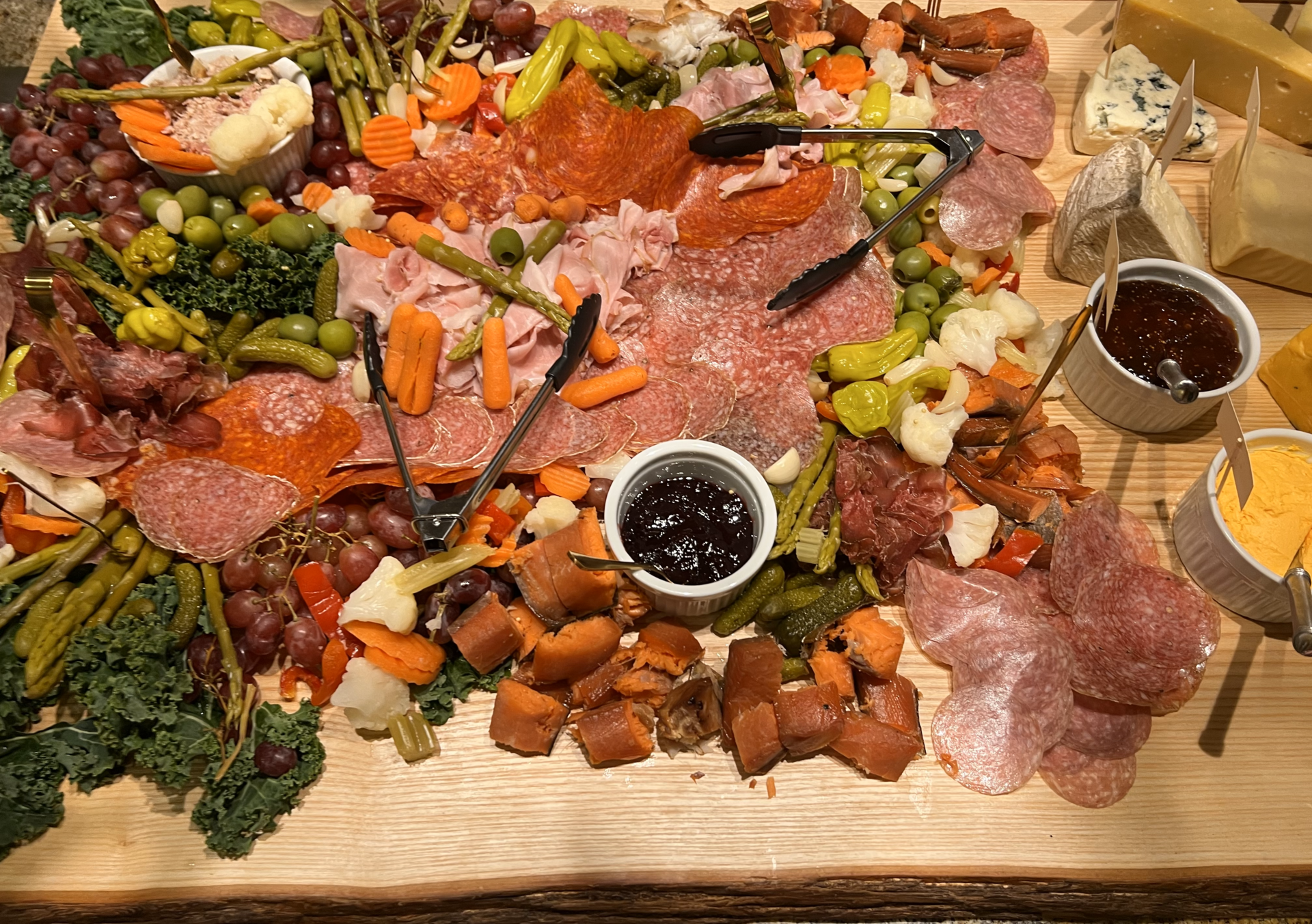
Photo: TammyBellBells, “Traditional Charcuterie Board,” Wikimedia Commons, CC BY-SA 4.0. The image illustrates a use case; it is not a DHgate listing, tested sample, or endorsed supplier product.
Build a shortlist from channels, not assumptions
Public pages can show that a channel advertises a product type. They do not prove current stock, quality, compliance, final cost, or suitability for your order.
| Discovery channel | What the cited page shows | Evidence still required | When to keep it on the shortlist |
|---|---|---|---|
| Retail marketplace search | Amazon search results advertise multi-board products | Exact seller, pack count, dimensions, material, finish, delivery and return terms | The selected bundle matches the written specification |
| Specialist board wholesaler | WholesaleCuttingBoards.com advertises hardwood charcuterie boards and a stated wholesale minimum | Current quote, species, finish, customization, freight, and food-contact evidence | The supplier confirms the exact board and commercial terms |
| Custom-maker marketplace | Etsy search results advertise mini boards and personalized options from individual sellers | Maker identity, proof process, material and finish, quantity, lead time, and rights to artwork | Customization is documented and a production sample can be approved |
| B2B marketplace | Faire discovery results advertise wholesale mini-board products for retailers | Brand and supplier identity, exact terms, resale packaging, and repeat-order evidence | The line fits the resale specification and current account terms |
| Cross-border marketplace | A dated DHgate listing advertised a mini wooden paddle-board blank | Selected option, seller identity, material, finish, food-contact status, sample, freight and import inputs | The exact offer passes the same specification and sample gate |
Do not rank the channels by reputation alone. Rank the specific offers by how completely they answer the same specification and how well the sample matches it.
Calculate landed cost per accepted board
A wholesale quote is incomplete until all costs are normalized to the same quantity and quality threshold. Use:
Landed cost per accepted board = (boards + customization + packaging + freight + insurance + tax and duty if applicable + brokerage + payment costs + inspection + expected loss) / accepted boards received
Record each input rather than estimating with a blanket percentage.
| Cost input | What to capture | Common comparison error |
|---|---|---|
| Product | Selected option, quantity, unit or lot price, and currency | Applying the lowest displayed variant price to a different board |
| Customization | Setup, proof, per-board work, rejected proofs, and packaging changes | Comparing a plain blank with an engraved finished board |
| Freight | Service, origin, destination, carton count, weight, and quote validity | Dividing shipping by ordered units instead of accepted units |
| Import and payment | Tax or duty treatment, brokerage, currency conversion, and fees | Assuming checkout includes every import cost |
| Inspection and loss | Sample, inspection, damage, warping, finish defects, and unusable units | Treating nominal quantity as sellable or event-ready quantity |
For cross-border offers, the customs, tariffs, and import-fees article explains why the order total is not automatically the final landed cost. Use current official guidance or a qualified broker for the exact product, material, origin, and destination.
Verify the sample against the intended use
Order the smallest practical sample after the seller confirms the written specification. A visual check is necessary but not sufficient.
Measure and record:
- length, width, thickness, flatness, handle or hole position, and weight;
- material and construction against the seller’s written statement;
- surface smoothness, edges, finish coverage, visible glue lines, cracks, and warping;
- odor, color transfer, staining, cleaning response, or other behavior relevant to the intended use;
- customization accuracy and whether the mark changes the usable surface;
- individual packaging, labels, carton protection, and damage on arrival.
For food service or resale, use appropriate independent expertise or testing when the risk, rule, or buyer requirement warrants it. A photograph, marketplace badge, seller rating, or one passing sample does not prove future production will be identical. Require written change notification and define whether later lots will be inspected.
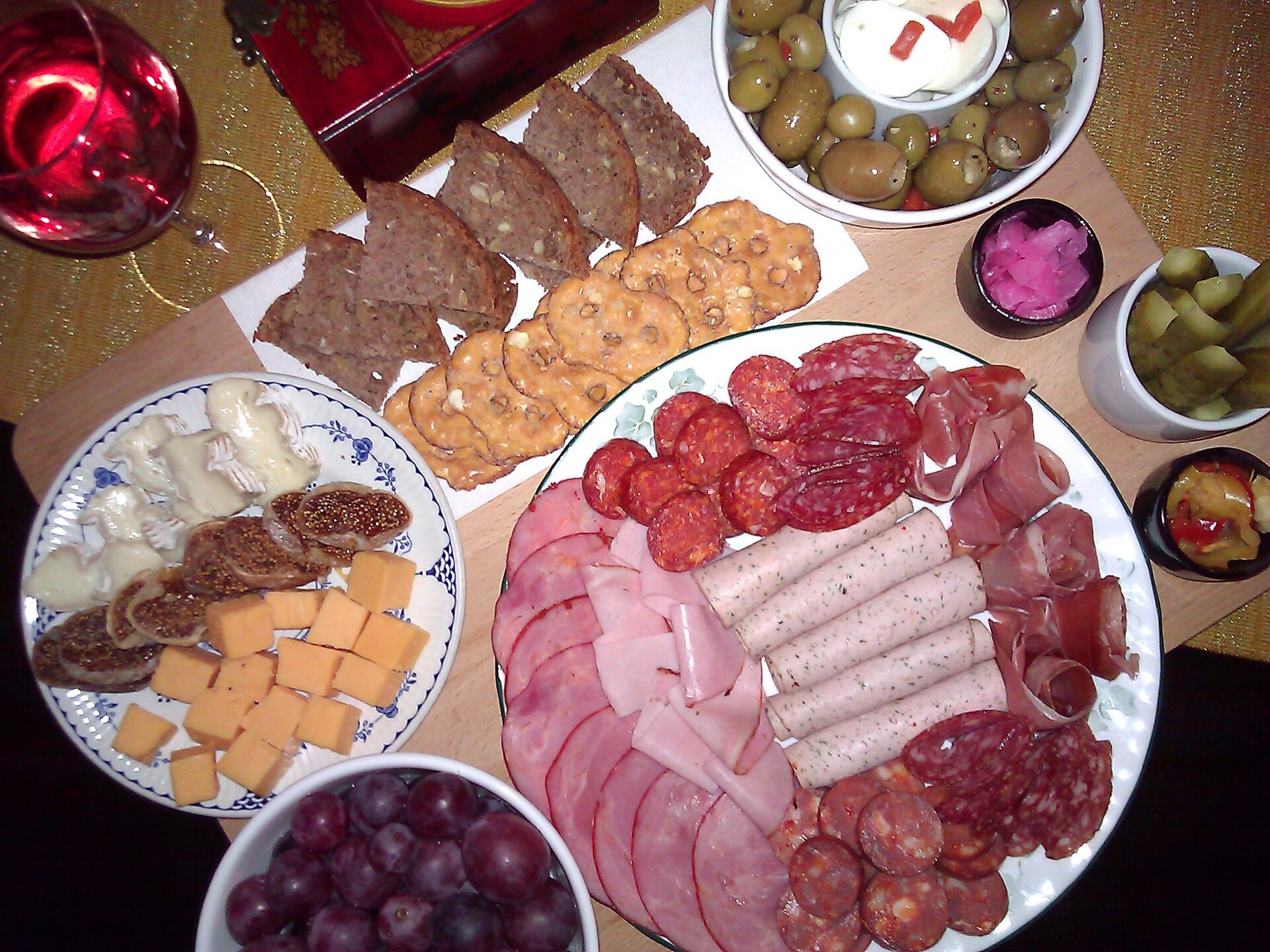
Photo: Ddolacki, “A charcuterie board,” Wikimedia Commons, CC BY-SA 4.0. It illustrates a serving-board use case, not a tested wholesale product.
Treat DHgate as one seller-by-seller comparison route
If considering DHgate:
- open the exact selected option and save its details with the date;
- identify the contracting seller and invoice issuer;
- ask for measurable material, finish, dimension, packaging, and customization answers;
- approve a physical sample before volume;
- compare the resulting landed cost with domestic and other B2B quotes.
The DHgate supplier-finding workflow helps structure seller shortlisting. The broader DHgate, AliExpress, Alibaba, and Temu comparison provides channel context, but neither replaces product-level evidence.
Approve the offer only when the record is reproducible
The lowest workable price is the lowest landed cost among offers that meet the same specification, pass the sample gate, and leave enough time for inspection and replacement. Keep the approved specification, quote, selected option, seller identity, sample record, packaging requirements, cost calculation, and delivery commitment together.
Reject an offer when the board’s intended use is unclear, the material or finish cannot be documented, the selected option changes during checkout, customization lacks a proof, or the margin depends on omitting freight, import, inspection, or defect costs. That rule is more reliable than assigning Amazon, Etsy, Faire, a specialist wholesaler, or DHgate a permanent “best” ranking.