
If you’re in the US buying satin ribbon wholesale or in bulk, you usually get the lowest total cost by matching your order size to the right channel. For 10-20 rolls or mixed colors, retail bulk deals from Amazon or craft sites often win on simplicity, even if the per-yard price is just okay. Once you’re at 50-100+ rolls of similar width and material, specialist US ribbon wholesalers tend to beat general marketplaces on per-yard cost. Cross-border marketplaces can undercut everyone on unit price for large, consistent orders or customized logo ribbon, but only if shipping, import fees, and lead time don’t erase the savings.
What Really Makes Satin Ribbon Cheap or Expensive in Bulk
Satin ribbon isn’t priced just by “roll count.” You’re paying for material, width, total yardage, and how it’s packed.
Most satin ribbon is made from silk, polyester, or acetate. Silk gives you a very soft hand and upscale feel at a higher price. Polyester satin is the workhorse: shiny, durable enough for packaging and events, and typically more affordable. Acetate sits in between and is often used for decorative uses where rigidity matters. If you’re strictly budget-focused for gift wrapping or ecommerce packaging, polyester satin is usually the value pick.
Width is the next big cost driver. Narrow widths like 3-6 mm are cheaper per roll but can be surprisingly expensive per yard if you forget to check yardage. Wide ribbons (1-4 inches) cost more because they use more material and are heavier to ship. For packaging, many small brands land on 3/8″–1″ widths as the sweet spot—wide enough to look premium, narrow enough to keep roll prices reasonable.
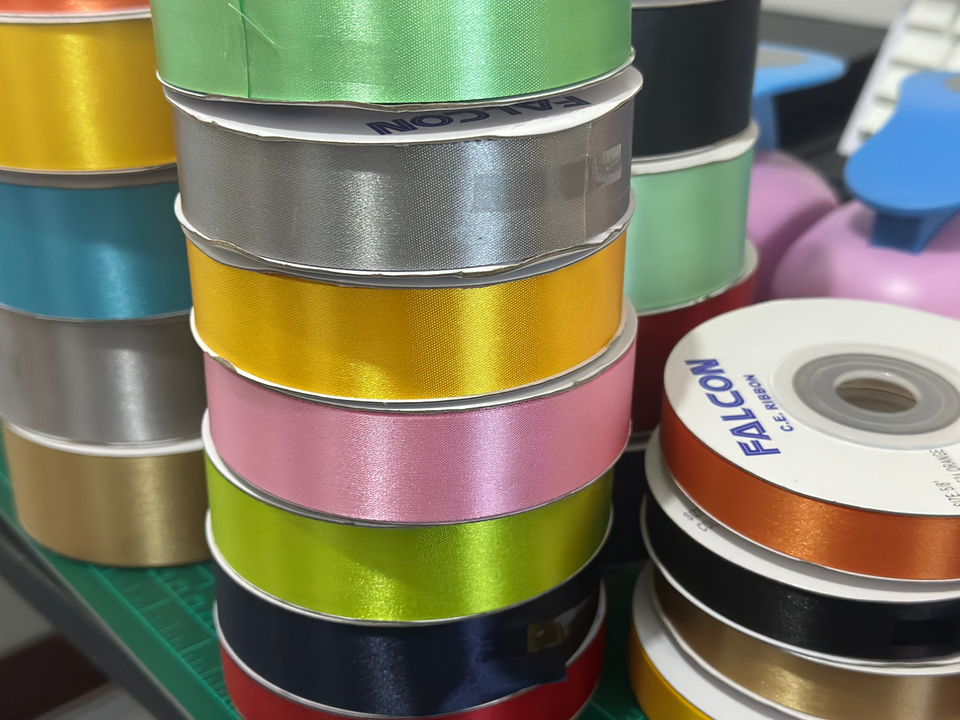
Bulk pack structure also matters. A 6-roll pack with long yardage per roll can be cheaper per yard than a 24-roll pack with shorter yardage. Cross-border listings, for example, show multi-roll satin ribbon bundles where prices range roughly from the high single digits to the mid-$40s depending on width, length per roll, and number of rolls. Those headline prices can look great, but your real comparison is dollars per yard after shipping.
How Order Size, Specs, and Timing Change Your Ribbon Price
Certain specs and conditions change what you pay, even if two listings look similar at first glance.
1. MOQ and order size
Wholesale and bulk sellers often nudge you toward minimum order quantities (MOQs). A US-focused seller like RibbonBazaar, BBCrafts, or Paper Mart usually lets you buy by the roll but discounts when you buy more of the same width and color. The economics are simple: if you genuinely need 100+ rolls of the same polyester satin ribbon, a wholesale-oriented site often gives better per-yard value than buying scattered 5-packs from retail marketplaces.
For smaller orders—say you need 8-12 rolls spread across many colors for a one-time event—you rarely save money by chasing wholesale MOQs. You risk overbuying just to hit a discount tier. In that scenario, consumer-facing bulk listings from Amazon or craft chains can be cheaper overall, even with a higher nominal per-yard price, because you’re not paying for unused inventory.
2. Width, color mix, and customization
Wider ribbon and complex color assortments generally raise costs. Single-color bulk rolls are priced to move. Assorted color packs and specialty finishes (metallic edges, wired edges, printed patterns) command a premium because they cost more to produce and sell in smaller production runs.
Custom printing (brand logo, event text) is a big price pivot. Domestic wholesalers may offer logo ribbon with set-up fees and per-yard surcharges. Cross-border sellers often advertise custom satin ribbon with wide price ranges, where the base pack might sit around the high tens of dollars and climb with more complex artwork or larger total yardage. For a brand that uses the same logo ribbon across many shipments, paying more upfront for customization can still yield a reasonable per-package cost. For one-off events, customization easily doubles or triples your ribbon spend compared with plain satin.
3. Seasonal demand and timing
Demand spikes around holidays and wedding season. General marketplaces and craft stores sometimes raise prices or sell out popular colors and widths. Wholesale sites may hold steadier pricing but can take longer to ship or require larger orders.
Budget strategy here is straightforward: if your business uses the same ribbon all year, buy in bulk off-peak (late winter or mid-summer) and store it. Buying ribbon in bulk is widely recommended as a way to push down per-unit cost when you need larger quantities of the same material or color—you’re letting the seller schedule production more efficiently while you secure a better rate.
Choosing the Best Channel: US Wholesalers, Retail Bulk, or Cross-Border Marketplaces
Different channels shine for different order sizes and needs. You’ll get the best value by matching your situation to the right lane.
Channel tradeoffs at a glance
| Your situation | Likely best channel | Why it often wins on budget |
|---|---|---|
| 5-15 rolls, mixed colors, fast shipping needed | Retail bulk (Amazon, craft chains) | Simple ordering, small pack sizes, no MOQ, domestic shipping costs. |
| 50-200+ rolls, same width/color, plain polyester | US wholesale ribbon sites | Lower per-yard pricing, broad color cards, wholesale-oriented discounts |
| 100+ rolls, custom logo or specialty printing | Cross-border marketplaces | Very low unit prices can offset set-up costs if you accept complexity |
| Irregular, project-based buys, mixed specs | Mix of retail bulk and wholesalers | Avoids overbuying just to hit MOQs |
Domestic wholesalers and bulk ribbon sites
US-based specialist ribbon sellers like RibbonBazaar, BBCrafts, and Paper Mart position themselves squarely as wholesale or bulk options, offering satin in many widths and colors and often differentiating between single-faced and double-faced satin. Their strengths for budget buyers:
- Per-yard pricing for large orders: If you can commit to uniform specs (e.g., 1″ polyester satin in your brand color), these sites usually undercut general marketplaces on the true per-yard cost once you cross a certain volume.
- Assortment depth: They keep wide color and width ranges, making it easier to consolidate orders instead of piecing together multiple smaller purchases.
These sites are less compelling for very small, varied orders because you might pay shipping from several vendors and miss the bigger discount tiers.
Retail bulk (Amazon and similar marketplaces)
General marketplaces like Amazon’s bulk ribbon section carry large assortments of satin ribbon in consumer-friendly multipacks. For many small ecommerce brands and event planners, this channel wins when:
- You need modest quantities of multiple colors and widths.
- You value quick fulfillment and familiar checkout over the absolute lowest per-yard price.
Retail bulk often doesn’t match specialist wholesalers on pricing for big, uniform orders, but for 10-20 rolls spread across colors, not having to meet MOQs or juggle wholesale account requirements is a real cost saver.
Cross-border marketplaces, including DHgate
Cross-border marketplaces add a third option: very low unit prices, broad customization, and a huge variety of satin ribbon formats. DHgate, for example, has multiple satin ribbon listings as of 2026-09-28:
- A multi-roll bundle like “6 Rolls 150 Yards Solid Color Satin Ribbon for Gift Packaging and Event Decor” priced in the roughly $25.47–$47.35 range per listing.
- Single-roll or shorter-length listings such as “22 Meter Satin Ribbon 2cm Width Polyester Fabric for Crafts and Decor”, around $9.49–$11.14 per listing.
- Printed and specialty options like “Colorful Satin Grosgrain Printed Ribbon for Wedding Packaging and Decor”, ranging widely from roughly $13.99 up to $148.46 depending on spec.
All of these are examples only; listings and prices can change. They illustrate that cross-border sellers can offer satin ribbon at attractive sticker prices per pack, especially for polyester satin and multi-roll bundles.
For a US buyer, channel-fit questions are practical:
- Is your demand predictable and large enough? Cross-border orders make more sense when you’re buying large, consistent quantities or customized ribbon you’ll use for many months.
If you’re considering DHgate or similar platforms for wholesale supply more broadly, it can help to look at comparisons like Compare DHgate with AliExpress, Alibaba and Temu and guidance on finding wholesale suppliers on DHgate before committing.
A Short Budget Checklist Before You Click “Buy”
Use this quick pass to keep satin ribbon spending under control:
- Lock your specs: Decide material (usually polyester for budget), width, finish (single vs double-faced), and whether you truly need customization.
- Estimate real usage: Translate your monthly or event usage into yards, not rolls, so you can compare offers fairly.
- Match channel to quantity: Under ~15 rolls with mixed colors? Start with retail bulk. Over ~50 rolls of a single spec? Get quotes from US wholesalers. Large, predictable, or custom orders? Price out cross-border options and calculate landed cost.
- Avoid buying just for discounts: If a MOQ forces you to buy significantly more than you’ll use within a reasonable window, the “discounted” per-yard price may still cost more overall than a smaller, higher-priced bulk pack.
If you treat satin ribbon as a per-yard, per-project cost rather than a generic craft supply, you’ll quickly see which wholesale or retail channel actually gives you the best value for your specific order—not just the lowest headline price.